Robin Ijsseldijk
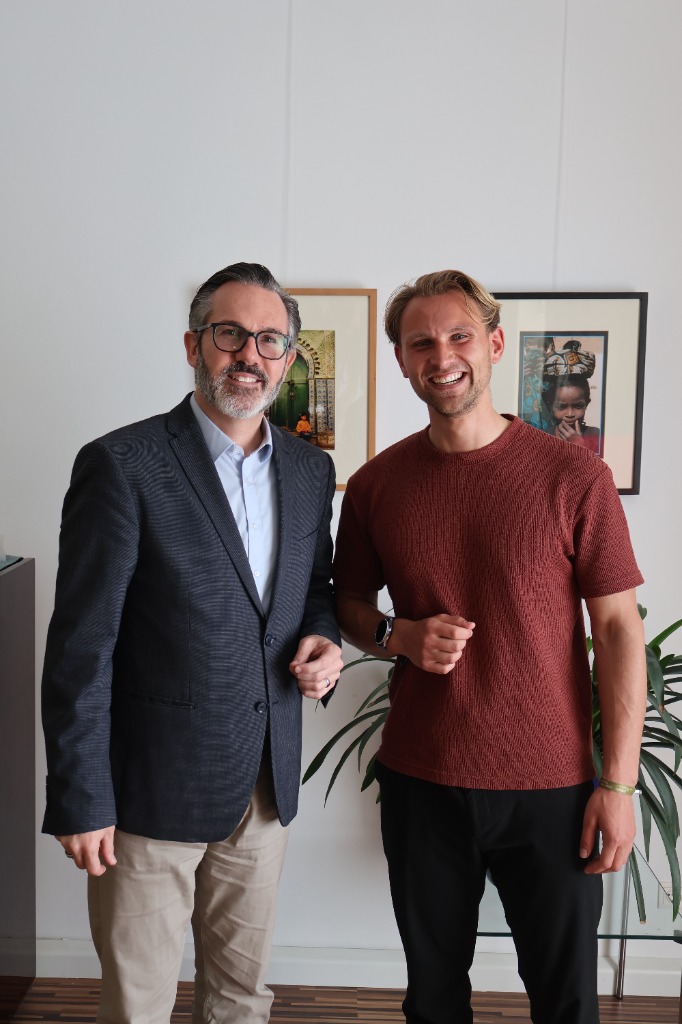
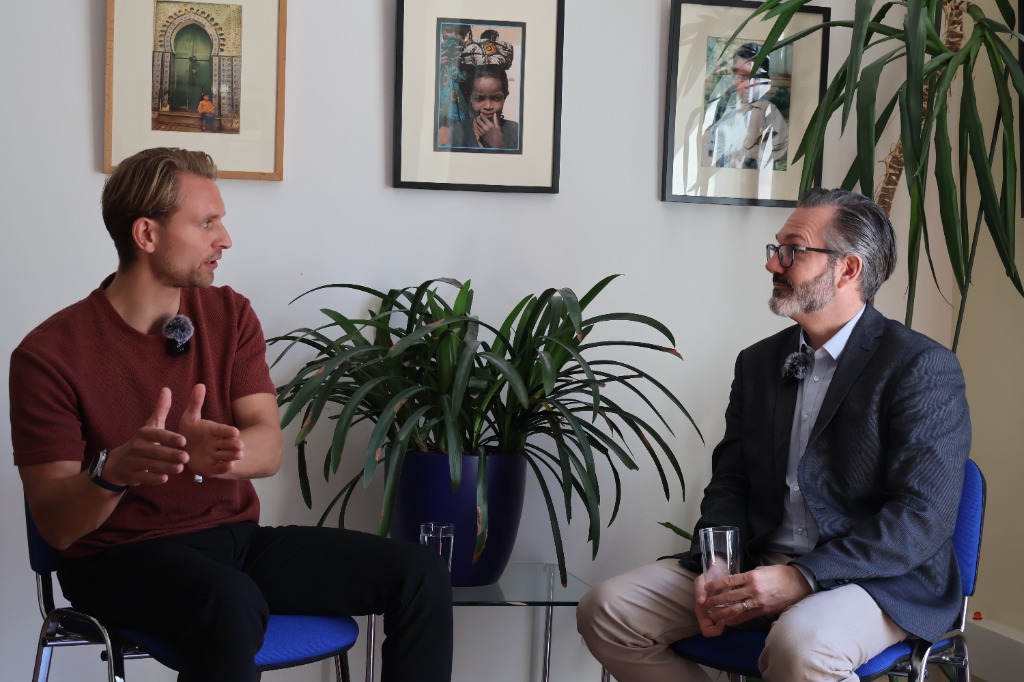
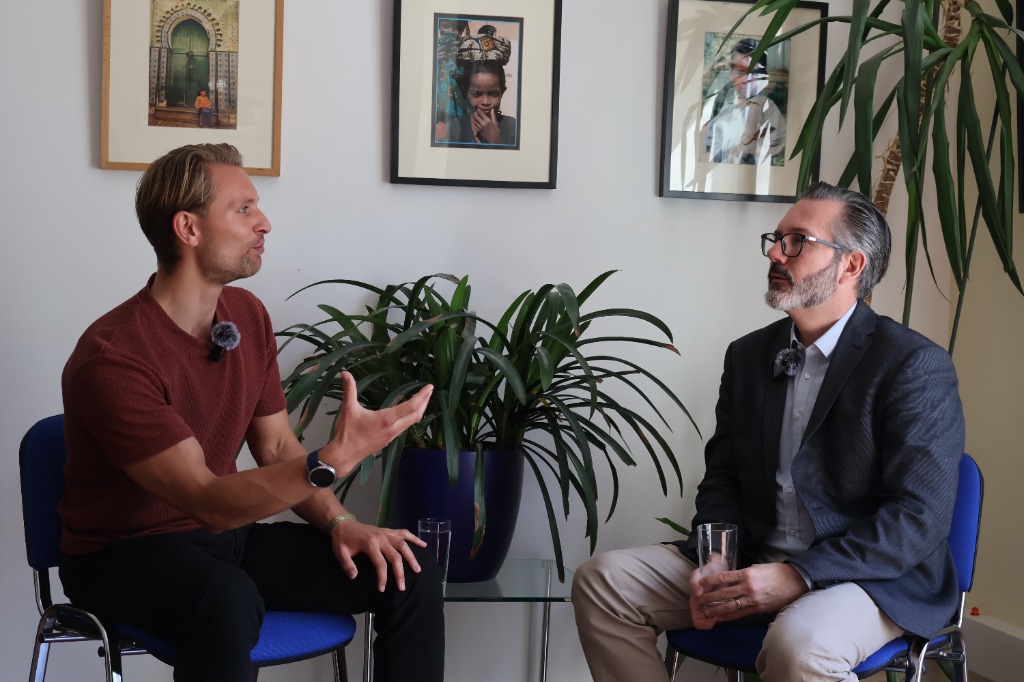
Welcome back to the channel. My name is Robin, and today I am very stoked and thrilled to announce to you such a skillful guest. Today I am here with David Corcoran. David is a former professional opera singer in the Sydney Opera House and now turned into an emotional intelligence and communication skills coach based in Vienna. Now, David combines his mastery of the stage together with deep psychological frameworks and teaches professionals how to actually use physical tools like vocal intelligence and body posture to regulate your internal world. Now, David, there are so many things that I can unpack here with you because you have such a broad portfolio. But before we dive in, could you maybe share a little bit of background information with my audience before we kick anything off, and how you got to this point in your career?
David Corcoran
Sure. Well, yes, thank you firstly for having me, Robin, on the channel, and it is wonderful to meet your viewers or at least to influence your viewers in a positive way. So, yes, I became an opera singer at around 23. Prior to that, I had studied my bachelor degree, thinking I was going to be an organizational psychologist. And basically, I transitioned. I switched. I found the thing that really lit me up and was something that I was really good at. And so very quickly, I advanced through my career. But then I pivoted again when we got here to Europe 11 years ago, and I realized that I could bring the best from the stage into everyday life for people. So then that way, executives, now students, so I am now a lecturer at Hochschule Burgenland, which is another pivot that I have made in the last couple of years, because I see now the opportunities are to help younger people to really thrive and grow in their careers. So rather than having to take 10 or 12 years in your career to find those vocally intelligent steps, to use your hands in a positive way, or have your body language really support your message, we can shortcut that through the work and the life that I have led so far.
Robin Ijsseldijk
That is incredible. And just out of curiosity, because I can bet it is such a transition going from being an opera singer to being a coach in many different industries. What was one thing that scared you the most in that transition, and how did you use it to become that coach that you needed to be?
David Corcoran
Sure. I have always believed in doing things... there was not a clean cut, I think is the best, shortest answer. So it was not like, right, I am going to be a coach now, and then I stopped doing opera. There was sort of a gradual wind down as these other activities were winding up. So it was actually in 2012, I think, or 2011, that I decided to become a coach. I was a full-time opera singer, and I thought, ah, I want to do a little bit of this on the side. And so I took my training, which is usually a couple of years, to be an ICF-accredited coach. And so when I arrived in Europe, I was like, well, okay, let us see where the green lights are. The green lights at that time were not for me in opera. I tried out for a few auditions. I also changed voice type, so I sang as a tenor professionally at Opera Australia, at the Sydney Opera House. And then I had new teaching here, where the teacher advised me, and I also had a lesson with a famous Heldentenor, who said to me, "You are a high baritone." So I had to make a choice. Do I want to spend now years learning new repertoire to be a high baritone, or do I want to take this opportunity to see how I could pivot and use my coaching skills and degree and diploma in a new direction? So I had studied professional coaching to be more of a life coach or a lifestyle coach or a career coach. But then I pivoted and saw, well, I will actually bring my native English skills to Europe, and I had done the CELTA course to be a foreign language trainer as, again, a little upskill in my first journey here in Europe, because I thought, well, people are always going to want perhaps to converse with me or improve their English. So could I be helpful there? Did I enjoy that? And then I started to realize, when I was coaching people in companies as a language coach, that in fact, this was akin to being on stage. If you have got 90 minutes with a group of 10 executives or 10 people in production, you do not want to waste their time. You have got to get in there and you have got to make it snappy, make it work. And what I discovered is that many people had had the experience, especially here in Austria, of growing up learning English by rote, learning English through stress, through the perfection element, you know, it has got to be perfect. If it is not perfect, I am not speaking English. And I could ease their minds and say, "Hey, we are here to have some fun. We are here to enjoy the process of learning, and how can we do that in a positive environment?" So I started to see that there was a performance element to what I was bringing, which I had from the opera and could not manipulate but could certainly bring about through emotions.
Robin Ijsseldijk
And also lower the threshold a little bit for the ones interacting with you, right? Because as you said, it can be nervous to interact, and maybe it was English, and how to go to that certain level that they think they should be at. But then their threshold can be pretty big and daunting. And at the same time, you provide that safe space for them to lower that threshold. And to touch upon that, because it is really interesting, because you said you are bringing that performance off the stage into class. Talking about body language here, what exactly is body language, and how can we use it to actually have a better quality of life?
David Corcoran
Yes, so what I have really seen is that, and this is now really the last 11 years, so of course, in the opera, you are given a character, and you have to portray that character. Now that comes with, therefore, well, body language. So if you are being a soldier, playing a soldier, how does a soldier stand? So that you then watch and observe, this is where my psychology skills came in, the power of observation. So I would look and watch on YouTube, or from my experiences, I draw on that. And then a good director will help bring out those nuances. So it might be a bit of tension in the hand or the fingers, or it might be the way you hold the gun. You know, we had experts who would work with us about weapons and how to hold them so you did not look like you were holding a toy gun. Same if you were having to act a smoking scene, you know, how do you smoke a cigarette? How do you hold it? So sometimes we can draw from our own experience. But in terms of then applying that, what I have seen is that when we are speaking, we are using our hands usually quite well, quite easily. And so body language is nothing more than recognizing, what am I projecting into the world? And the way I have been able to help my clients and students is to recognize that when you want to improve your English, improve your body language. Because often the two are paired, unconsciously and consciously. So a lot of movements that we have are unconscious. And so when I am coaching one-on-one with people, I am looking for those things that are annoying. Maybe twirling the hair for a woman, or touching your face too much as a man, or you know, maybe you have a nervous tic, or something that you are doing there. But for most people, once they get over that, it is really about, what am I communicating? And I have realized there is a power between combining your voice and vocal variety with the word choice that you are using, with the emotions that you are feeling, this is the emotional intelligence, to then find, and this will all impact the way you use your hands and your body. And so I often share with people, remember, you are in a sense a musical instrument. From head to toe, you are the instrument. So you are not playing this, you are enacting this. So really, to help people, as I say, if it is a speech or a presentation, or just improving daily English, it is almost like, well, let us act it out. A lot of people might say to me, well, that feels like I am faking it till I make it. And this is a popular term. But I realized, I had an "aha" the other day: I am not faking it, I am feeling it. There is a big difference there. Because when we feel it, so this is where my training and when I arrived in Vienna about a year later, I started my emotional intelligence journey to add that to my coaching portfolio. And so what I understood is that when we feel something, then often the hands do what they need to do. The voice does what it needs to do. So it is sort of like an inside-out approach. You can change the feeling to change the body language. Or, as I just described, you change the body language, I am playing the soldier now, or I am acting as the CEO, change the body language, which will also change the feeling.
The "Name It To Frame It" Protocol
- 1. Acknowledge Your Exact Feelings: Express your internal state to a trusted person without editing. Say, "I feel nervous about this situation."
- 2. Identify the Balance: Feelings are rarely singular. Recognize the percentages (e.g., 25% nervous, 75% excited) to prevent fear from dominating your state.
- 3. Use the Energy: View nervousness and excitement purely as neurochemical energy. Activate your body physically rather than freezing up.
Robin Ijsseldijk
So kind of like mirroring, copying someone who feels in that certain state? And then internally, kind of like biochemically, you start to also shift that internal state. So interesting question, because I also have a couple of questions from my community actually, which are quite interesting. And one of those questions was, when, let us say, you walk into a high-pressure room and you feel very nervous to maybe go into the room, maybe because there is a meeting going on that you do not want to get into. How can you still maintain authority while still conveying the message and not feeling too stressed about what it is that you are going to say, using your body language?
David Corcoran
So I guess two things come to mind here that you should think about: who am I talking to? What does my audience need or command? So if it is a high-pressure board situation, well, go in wearing your best shoes, your best suit, your best outfit. Make sure you look good, feel good, and try to cultivate... so we can have mixed feelings. So I can be nervous, yes, for this opportunity, but I might also be excited to share my new project. So you have to balance that out. Now there is a concept in emotional intelligence called "Name it to Frame it". So I am not going to walk into the board and say, "Guys, I feel really nervous, this is my first time." But talk to a good friend, talk to your coach, write to your spouse, write to someone else in your life and say, "Phew, I feel a little bit nervous about this upcoming situation." Now if your friend is a good friend, they might say, "Well, what else are you feeling?" And you could say, "Well, actually, I am also feeling excited to share the new project that I have been working on." Ah. So then the question might be, what is the balance of that? Oh, well, I am 25% nervous and I am 75% excited. Or vice versa. Ah. So then the next step might be, well, okay, what else can you do to help yourself? Well, I know personally, you know, we have this podcast today, I rode my bike here. It is only eight minutes on the bike, but enough for me to feel energized. So activate yourself. And I am using the energy. So see nervousness, see excitement as just energy. Neurochemicals. And so basically, how are we able to move those? So people get stuck when they do that. And the other thing, the second thing to think about is when they walk into that space... so besides who am I talking to and what do they need, is, okay, what can I do in the moment? Because I think that is really the key. It is really the first 10 seconds of the speech. It is walking into the room, and I have had lots of experiences walking in to do an audition. They do not know you, you do not know them, there is a piano in the middle of the room. You have got to walk in and say, "What do you want to sing first?" You say, "Ah, I would like to sing 'Dies Bildnis ist bezaubernd schön' from 'Die Zauberflöte'," something like that. "Okay, away you go." And then "Bum, bum, bum, bum, bum," and then you sing. You know, straight in. And so you do not have time to charm your audience, to warm up, to shake a hand. It is very clinical. Very clinical. So maybe in the business sense, to your audience viewer there, you know, maybe go in and shake hands. Look for the person on the other side of the room that you do know and walk straight up to them and say, "Ah, Robin, great to see you. It is David." You know? And then you get that ball rolling. "Ah, I do not know everyone here. Hi, I am David." You know? So you are playing again, you are feeling the confidence, you are not faking it, you are feeling the confidence in order to make that best impression.
Robin Ijsseldijk
You kind of like set yourself up for a good meeting or a high-pressure room, because if you kind of like know the unknown, then the fear it tends to maybe fade a little bit or you get a bit more comfortable with it, right? Kind of like making friends with discomfort is something I like to say always. And oftentimes people, you know, maybe shy away from making friends with discomfort, but I think that is where it happens. And another question that I got, because let us say, you know, if you walk into that high-pressure room, sometimes even though you did all of these steps, people forget to breathe. They just hold their breath, like they are there, maybe cannot share the thing that they want to share because their breath is just, you know, cannot make way for the things that they want to say. Hence, it has an effect on their nervous system too. How can they command their body to still make it able to combine that breathing exercise or maybe any breathing framework at all with feeling that you have that authority and also internal command of your body?
David Corcoran
Yes, breathe through your nose. Try it now. And you see your belly starts to move. As you just said that, so I am also feeling like higher in breath, having this first-time experience. I am not uncomfortable, but you know, there is always an element of wanting to do well. And so even just you saying, "Ah, talk about breath," and my body went... Like I am sitting in a spa.
Robin Ijsseldijk
Yes, because right now we make the space to do so.
David Corcoran
Yes, make the space, exactly. So it is like, ah, you are talking, I can breathe. So maybe if I am in that room, "How are you, John?" And as you are listening, you know, your mouth can be quiet, you can breathe through your nose and then let the air get nice and low in your body. So this is something that, okay, maybe in the beginning you need to train. There are other situations where you might just go, sniff, sniff, sigh. This comes from Andrew Huberman, a well-known guy on Instagram and so forth, but... Now I cannot say, "John, how are you?" and do that, but maybe if I am setting up my tech before my presentation, or I am preparing the room, or doing something else, or I am sitting at the back of the room listening to the other speaker, I can just quietly... So what we are trying to always get is to get the breath down. When we are uncomfortable, the breath gets high. And as you said, like choking. So if you are feeling choked, then you really are at an extreme. So then you ought to also pay attention to your posture. So if your shoulders are over your hips and maybe your feet are flat on the ground like we are sitting now, then we are in the best possible way of position to allow our breath and our stomachs to relax. But if you are wearing tight-fitting clothing, because you are trying to impress by having big muscles or whatever, which I have seen a lot of young people do, you know, and it is fine, but it is fine for the club. It is not fine for the boardroom or the presentation environment or your bachelor defense of your degree or something like this. So go in with nice fitting clothing that can expand, that can be comfortable to breathe. If your pants are too tight, that is going to cause you distress. So breathing through the nose, therefore. Now what does that do? It warms the air as it goes in. You could breathe through your mouth, but you are getting a shot of cold air to the back of your throat. It is more likely to make you want to grab a drink of water or to cough. So breathing through the nose... Now we did it really consciously and obviously, but of course there are subtle ways to just do that.
Robin Ijsseldijk
Yes, definitely.
David Corcoran
And then pay attention to the, ah, where is the tension? Ah, it is in my shoulders. Okay, let them go. So you can do a body, heart, mind scan. Start with the body. Okay, where do I feel tension in my body? Ah, I feel it in my hand right now. Okay, I will just relax the hand. I am not going to shake it out, but I can just relax. Okay, now my knee feels funny. Okay, good. Or my shoulder, or my neck. So you can be sitting in the boardroom, sitting in the presentation environment, in the theater, wherever, and just paying attention to that. And if you get the breath nice and low.
The High-Pressure Breathing Framework
Breathe strictly through your nose to warm the air and force the breath down low into your belly. This instantly signals safety to your nervous system.
Stack your posture: align your shoulders directly over your hips and place your feet flat on the ground to open the breathing channel.
Perform a quick scan to find isolated tension. Release the tension in a specific area (like a hand or shoulder) without losing your overall posture.
Robin Ijsseldijk
Because what I immediately notice, like now we made space for it, but especially with this interview right now, I also noticed that when I came into the room, I was high in energy, enthusiastic, but also you can direct that energy a bit more consciously. When you take that step. And now that we just did that, I feel way more focused also. A bit more focused and grounded in this conversation too. Because just we made just the space for it.
David Corcoran
Yes.
Robin Ijsseldijk
And to turn the page a little, in combination with the breathing frameworks that we just got here, I also know that you teach vocal intelligence. First of all, what is vocal intelligence for the people who do not know that? But also what are maybe three criteria that people should look at when actually enabling themselves with vocal intelligence?
David Corcoran
So vocal intelligence is really about, can I say the right thing in the right place at the right time in the right way? So we have all had experiences where something felt a little bit off. You know, our speech did not land with the audience. There was no resonance. And so we have to remember, what does my audience want to hear? So when I am vocally intelligent, I am focused less on myself, but on my audience. We always think about what do we want them to know, but so the first real tip here is, focus on what do you want them to feel? And this goes back to our emotional intelligence. So vocal intelligence says, right, this is a podcast for your viewers who are younger, who are wanting some wisdom and advice so that they do not have to take years and years to go through the same traps to arrive at the same place. So vocal intelligence says, you know, if I am going in for a job interview, how old are the people? What do they do? What is their background? If I am talking to a CEO, for instance, they like short, sharp communication. Notice what happened to my voice? Short, sharp communication. Chop, chop, chop, with my body language. Bang. But if I am talking to an audience like in my Toastmasters club or I want to be a TEDx speaker one day, so if I am trying to inspire and motivate people, then I want moments of being slow and low. And I might say, it is really important that we be here now. And so I am giving a different feeling to my voice. Now that comes from, like we said before, inside out, outside in. So really the first thing to remember is how do I want my voice to sound or how fast or slow, how high or low am I using my voice? Then secondly, vocal intelligence is about the word choices that we have. So it is about, I can say, "Hi guys, how are you going?" And that might be what you need for your introduction before. It was very nice and energetic, fast words, so if you watch that back, you would hear, boom, boom, boom, boom, great guys, and so boom. But that is what we expect of a podcast. A podcast does not start with saying, "Hi. Welcome everyone." I mean, a sleepy meditation soundtrack would have that feeling. So again, now with words, some words are shorter, therefore faster, and some words are longer. So I often characterize "Hi guys" with "Hello everyone and welcome." "Hello everyone and welcome." The amount of seconds that that takes is just twice as long as "Hi guys." So again, there is a different feeling that comes with that. So you can manipulate your words in order to, or choose your words wisely, in order to empower your audience to feel something based on what you perceive that you want them to feel. Vocal intelligence basically then says, we have three different ways of speaking. I can say, "Hello, my name is David." "Hello, my name is David." "Hello, my name is David." Three styles. Your intelligence says which one matches that audience in which way now.
David Corcoran
So, for me, I am an English speaker, so of course, I am referring to the English language here. But as an example, here we are in Vienna, and a lot of people when you go into the shops, as foreigners, they say, "Grüß Gott." "Grüß Gott." Hear it? It goes down. "Grüß Gott." And it sounds like a punch, punch. So if I walk in and I did not know that that is culture here in Vienna, I might say, "Wow, that person is so rude." And being from Australia or if you are from America or if you are from an Anglo country where you expect a little bit more, "Hi, how is your day going? Can I get you anything?" And I do not know what it is like where you are from, but you expect and we go through. So you are confronted with this and you might say, "Ah, hello," you know, and you feel confused. And so the point being, yes, that is a downward inflection. I have often challenged Austrians to say, "Well, why cannot we say, 'Grüß Gott'?" And they look at me funny because it is cultural now, a playful way. Yes. And it was Chris Voss who highlighted this playful way even in negotiations. So in his book, Never Split the Difference, he talks about three types of voice. He talks about the radio DJ voice, very low and very breathy, which might be good in some cases. Then he talks about the direct, assertive style, which you could imagine, if you are negotiating in a hostage situation, "Give me the guns or else. Release the hostages now." What does that do? That gives pushback immediately. But what he then advises, the third style of voice was this playful one. The playful, kind of, "Well, all right, now maybe you could give us the guns." You know, I do not know what he was doing and talking about, but I think this playful voice is the one that when we are walking into the boardroom, "Hi, good morning everyone. How are you today?" Or, "Ah, wow, we are all here. Fantastic."
Robin Ijsseldijk
Kind of with a little bit of excitement and curiosity.
David Corcoran
That is it, bringing the curiosity. And then I always ask people, this comes now into emotional intelligence, where I will say to a classroom of students, "Hi everyone, how are you today?" And then I listen. I am listening. I am looking at the body language. I am looking for the feedback. So if students have already had two classes, they are like, "I am fine. You know, I am here." And you go immediately, okay, where is this? We had a first connection through the university system, and there is an absolute difference in the sense of your class was full of international Erasmus students versus the local students. Because you were here for this six-month opportunity, you were eager and interested and curious to find out how a university system runs in Vienna, in Austria. And so therefore you bring a whole different attitude. So I can draw on that when I pay attention to that. Say, right, what can I do with that? So I do not need to perform and provide all the energy if there is already good energy in the room. And so therefore you start to bring in that, to create that psychologically safe space and that great environment.
The 3 Pillars of Vocal Intelligence
- 1. Focus on Feeling: Do not just plan what the audience needs to know. Actively construct your delivery around what you want them to feel (e.g., motivated, reassured, decisive).
- 2. Word Duration Control: Use short, sharp words to project command and authority. Use elongated, slower words to build deep connection and inspiration.
- 3. The Three Voice Styles: Master the "Radio DJ" (low and breathy), the "Direct Assertive" (downward inflection for authority), and the "Playful" voice (curious and upward) to match the cultural context.
Robin Ijsseldijk
And in your opinion, since talking about vocal intelligence, what do you see through your lens when coaching people or in your classes, what are maybe three bottlenecks that people are not maybe looking into the most when using their vocal intelligence or want to use their vocal intelligence?
David Corcoran
So they have not recorded themselves. So they do not actually know how they sound. And most people speak in a neutral tone, so there is sort of monotone. Especially German speakers, for instance. Because in their language, a lot of the tone is monotone. So it is okay to say, "Grüß Gott, wie geht's dir? Wie geht's dir?" And it is all, "Wie geht's dir?" "Ah." For them, it is too much. Do not do that, it is too dramatic. You are crazy. Like, what are you doing? Exactly. So you have to learn, therefore, which tones. But if we are speaking English, therefore we do want to change that tone. So you are not trying to be American or Australian, you are trying to use your voice in a way that brings an effect on people. And this is the way where, in a three-hour class or in a 90-minute session or even a 20-minute speech, you want to make sure that you have the vocal variety. Because it is also not okay to have the whole time, "Up, up, up! Hi guys, hi!" It sounds very Tony Robbins. "Ah!" And everyone is sort of crazed at the same time. So people could really afford to recognize their own basic tone, like which one are they using most of the time, and then work on the extremes. And you have to go to the extremes in order to come back to the middle. So sometimes I will say, "Right, do it. Do it again. Do it again." And I get them to do it five times. And then by the fifth time, they are like, "Ah, okay," and then they have to say something, they have to think. Because we just easily get into patterns. Our brains love patterns, and so we have to recognize that we all have a basic pattern.
David Corcoran
I too have basic patterns. Now maybe they suit the dynamic environment to be the bubbly presenter who brings energy. But if I do that all the time, then maybe the students get bored of that too. So I always have to think about times where I might change that tone. So if it is about an exam or an assignment, change the tone, bring back the level of seriousness that the moment commands. And so it is really about knowing, again coming back to that idea of right place, right time, saying the right thing in the right way. This is built on Kairos, which is part of the trivium, which is part of Aristotle's ethos, pathos, logos. When you get ethos, pathos, and logos right, you know, the credibility, the emotion, and the logic, you get Kairos in the middle. Which is saying the right thing at the right time. But I have added "in the right way," vocally. So that is the vocally intelligent part and the emotional intelligence part and the cultural intelligence part. So if you are not aware of those three intelligences as you are coming into a situation, you are either blinded, you are blinding yourself, or blinkering yourself, and then you might wonder why am I not resonating with my audience?
Robin Ijsseldijk
So someone would start, they could start there. That is like a good foundation to have a basis for vocal intelligence.
David Corcoran
100%. Who am I talking to? Where are they from? What are their needs? How can I inspire them? What vocal tone would suit this environment?
Robin Ijsseldijk
Amazing. Now I got a last two questions from my community. So when someone feels completely overwhelmed internally, but they need to project outward confidence, right? How do they alter their tone and pace in their voice so that they still listen to their feelings, but not feel internally pressured to be a certain way?
David Corcoran
They should warm up their voice. So that is as easy as, you know, coming here, I got here early today and was just, "Ah, ah, ah, ah." Doing some warmups. I mean, I do singing warmups, but a basic warmup is just, "Ah, ah, ah." Now this is also, "Ah." Someone says something good, "Ah." So if you are feeling overwhelmed, vocalize. Even if that vocalization is just, "Er." So I like to encourage people to use, "Ah, oh, ooh." Just mix those two.
Robin Ijsseldijk
It is so interesting that you mention it because we were just, I was just literally outside in front of the door, I was literally practicing the introduction as well, like I did it yesterday too, like repetition. But the reason I did that is because I wanted to get much more comfortable so that when the moment arises, I know exactly what I want to say, how I want to say it, and which tone I want to put in there, you know what I mean? So it is quite interesting that you touch upon that point too, because that is exactly how I think you can also command that room but still listen to your feelings, because although there might be excitement, maybe some nervousness, it is kind of like curious excitement in my opinion.
David Corcoran
Yes, that is it.
Robin Ijsseldijk
But you also lay the foundation for a much more comfortable session because you already know how you are going into that place, you know what I mean? I think that is one of the most crucial things that I think will be really helpful for anybody out there to start.
David Corcoran
Yes. Can I add one thing? So my first singing teacher, John Landor, said to me, "Get up three hours before." So if you have an early, we had a 9:30 event this morning, so I got up at 6:30. Because I give myself, my voice, that three hours to talk. So if you have not spoken, maybe you live alone or whatever, so you need to talk to yourself, you need to vocalize, you need to talk to the dog, you need to do whatever, in order to have that moment. Go to the local coffee shop, like I did this morning on the way, get my coffee, enjoy that, and have a little chat to the barista. These small moments then help your voice to feel oiled, and to also check in, like what is happening with my breath, and what is happening with my voice. This room is perfect for my voice because I can hear the resonance. But if I might go into a workplace where I am in a small meeting room, and these corporate rooms are often dull in sound, they suck the sound out, so suddenly I have to readjust my voice and just make sure that I am heard, but also not shouting at that person either. Do you know what I mean? So tempering my volume, thinking about my pitch, and yes, doing some exercises as you were doing, in whichever way. Practicing the introduction, practicing parts of your speech. Not then thinking, "Oh my God, I have got to get this right," because the other thing that I learned from Jerry Weissman, a speech coach who wrote this wonderful book about presenting, is that it is not about memorizing, it is about verbalizing. So what this means, to verbalize, is okay, I have got my notes, I have rehearsed, I have practiced, now the way I say that in this instance may not be exactly what I wrote down. And I try to encourage students now not to write out speeches. Write out key points, words, build a framework, build a mind map, draw on different things as we are doing now. You are asking me questions, I am drawing on my mind map of my experience. Now there is tons of stuff in there that we will not get to today, but it is all there, and should I need it, trigger, boom, there is a story. And I can extract that. So focus on the mind map before you go in, in order to know, right, I have got plenty. I do not have to, because often when we feel overwhelmed in these situations, it is because we do not feel that we are enough. And that is a psychological thing as well, we all deal with that. So recognize that we are enough, recognize that we are in the right place at the right time, and it is our job now to say things coming back to the right way. Do you see?
The 3-Hour Executive Warm-Up
You cannot demand peak performance from a cold instrument. If you have a high-stakes event, wake up exactly three hours beforehand.
- Vocalize immediately. Talk to yourself, talk to your dog, or have a conversation with the local barista.
- Do not memorize your speech word-for-word. Verbalize it. Build a mind map of stories and key points so you can adapt dynamically to the room's energy.
- Acknowledge the room's acoustics. If the corporate room is dull, project more. Adjust your volume and pitch purposefully.
Robin Ijsseldijk
Yes. There are so many things like I really wanted to, you know, pull that thread and, you know, it is so incredible to know because there are so many different topics that are so interesting. But the last question that I really want to get down is that someone asked me, you know, how can you present yourself professionally without creating a personality that is not authentically yours? Because I think one thing that I noticed as well, like especially, you know, when growing up, high school, I also needed to present, but I was very scared to do that. So I put out this character that was maybe enough for that moment, but completely out of line with how I would like to be. Yes. So what would you say to that person that maybe deals with the same situation?
David Corcoran
Well, it comes back to that phrase that I used at the start here. Faking it till you make it is something that Amy Cuddy talked about in her TED Talk, but I am not faking it, I am feeling it. So authenticity happens over time. I often then, when people say that to me in coaching, I say, "Do you think that I was always an opera singer?" I had to build the identity of an opera singer. So I had to recognize, okay, and that for me meant moving from Melbourne to Sydney. I started my singing journey in Melbourne, where I had been David the bachelor student, the son of Graham, the person who lived and went to St. Kevin's, and, you know, all that history. When I moved to Sydney to start in the opera school before joining Opera Australia, I could get rid of that identity and build David the tenor. So people did not care where I was from. They were like, "Which voice type are you? Oh, I am a tenor. What arias do you sing? Oh, I sing these. Oh, great, cool. Come to class, come do this." Worked with my singing teacher, "Right, how do we get your voice working?" Now that was not an instant change. During those years, I was forming the identity. I was also going to the opera and looking at what do opera singers do, how do they operate, how do they sound. And then slowly, step by step, I was building that. So for someone who transitions from being a student, a bachelor student, into their first job and career, that is what an internship is for. The internship is that three to six months where you are suddenly having to dress up nicely, you are going in every day, you are working 40 hours a week, you are recognizing that you have got an hour for lunch, you just cannot do whatever you want, you have got jobs to do, you have got tasks to fulfill, and whether you get a lot of autonomy or a little bit of autonomy is up to the internship. Maybe you have a micromanaging boss, you go, "Oh, that is a great experience." So therefore, when you then start your professional journey, you might then realize, "Ah, I have now gone from that." Just as you transition from high school student to university student. A lot of people in that first six months, they feel a bit lost because there are no teachers telling them what to do. The lecturer walks in, delivers, walks out. It is your job to be responsible for your learning. How are you going to learn? Do you take notes? Do you record the class? Do you use AI tools and get a meeting summary? All of that is available to people, but they have to take on the new identity, do they not? So to remain authentic, you have to decide what is in your journey. Which shoes will you wear? Do not just wear the shoes I tell you to wear, wear the shoes you want to wear for that next level. I heard from a student the other day, a Nigerian proverb who said, "People address you the way you dress." So the people speak to you the way you dress. So therefore, you know, the first step maybe for that identity change and to be authentic is to say, "Well, okay, I am going into a corporate environment. How will I dress?" Do not necessarily copy everyone. Look at the standard, and then say, "Right, how will I dress?"
Robin Ijsseldijk
Yes, why is it kind of like you, you need to make a product of your own conclusion, right? So maybe pick what is presented in the corporate world, pick your own fashion style, and somewhere in the middle.
David Corcoran
Take that step. Now see then how people respond. And then same with your approach to presenting, your approach to your work, your work ethic. You know, you could go into an environment where I have been a kind of go-go-go guy all of my life. Now, fortunately now, in my new position as a lecturer, I can relax a little bit. Because I do not have the impending deadlines, I do not have the people calling saying, "I need this now," or, "Can you jump in on Friday?" My semester is planned. And it is kind of a new journey for me to step into, that no one is beating down the door to say, "Have you marked all those assignments yet?" "Why have you not done the thing?" You know? And so I can go, "Ah, I have space to breathe here, you know, in my late 40s now." And it took like a good semester or two in this, in this more faculty, I am now faculty at Hochschule Burgenland, to recognize, "Ah, okay, like, there is not a crisis in the corner. The world is not on fire." And I am that personality that has to go and rush into a burning building and try to save everybody. And now, I do not have to do that. And so then I can change the pace, the cadence, I can drop back and use my authentic self to say, "Hey Robin, great job today. This is a wonderful initiative that you are building here for your viewers," and to be the cheerleader rather than the person who has to perform and put it together. Do you see?
Robin Ijsseldijk
Yes.
David Corcoran
"...of those fires that I am just continually fighting and putting out. But I am only doing myself a disservice, you see. So, authenticity can also say, right, how can I adjust? How can I keep tweaking who I am? And slowly, step by step, you evolve into that character. So I became the opera singer. The other thing is that if you are doing that professionally, you have to wait for the market to catch up. So, when I rebranded myself as an executive voice coach, maybe, you know, eight years ago now when I started my business, people were like, 'You are the language teacher, are you not?' You go, 'No, I am the executive voice coach.' 'But are you not the opera singer?' And so sometimes they get sort of mixed. So I meet some people who say, 'Oh, how is the opera going?' 'Well, I am not singing professionally anymore.' It is part of my story now, but it is not my identity. And so I know that it had worked, because recently, maybe a year ago, at a Christmas party, a colleague of mine said, 'So, how does an opera singer become a lecturer?' Do you see? And so they were now focused on that part of my journey."
Robin Ijsseldijk
"Because, well, it was a big part of the journey, but it is absolutely not who you are right now."
David Corcoran
"Not who I am now. But she really helped me to recognize, because everyone prior to that would ask you these questions of, like, 'Oh, you know, how was it to become an opera singer?' But it was wonderful that she recognized I am no longer, and she sees my identity; she knows me as the lecturer. Not as the opera singer. But of course, when I go home to Australia for a period, you know, catch up with old friends, they do not know where I am at either. So they are sort of stuck in the opera identity, or they might say, 'Oh, what are you singing these days?' Or they, 'Oh, I know you got out of singing, what are you doing?' They do not really know and have not seen the shift. So coming back to something like LinkedIn, you know, now my inquiries are about emotional intelligence. But it is not just emotional intelligence, which I was doing the last five years; now I have moved into emotional intelligence and lecturing and other things, you see."
Robin Ijsseldijk
"It is a combination of skills now. Yes. Yes. You kind of almost merge your own subject in that sense."
David Corcoran
"Exactly. So fewer people on LinkedIn contact me saying, 'Oh, you are an opera singer, great.' They contact me saying, 'Oh, you are a coach, and you do this, this, and that.' And that is great. I still keep my business alive with my emotional intelligence, vocal intelligence, and language intelligence, you know, the English language. So I am helping people in these three key areas outside of my work in soft skills and business communication at the university. But it is all the same; it is not like I am doing yoga over here, and doing, you know, law over here. Like, there is a parallel between the two. And I have realized now, in my late forties, that there is a red thread that connects everything. And so for younger people who are starting out, I mean, I am coaching this week some bachelor students, some of who say, 'Well, yes, my bachelor degree means nothing where I am from, or I am finding that people do not understand the topic, or something.' I go, 'Ah, that is interesting. Well, what can you draw from your degree that is relevant to those people?' So you have got to draw the connection for them. But there is some, maybe some disappointment, like, 'I have just spent three years studying this, and now I cannot get a job in this area, for instance.' You say, 'Okay, but it is not the end of the road here. You are only starting your career. Where might you be in ten years?' You may have done a master's, you may have worked a little bit. But ten years is not a long time in the overall sense of things. I think it was Tony Robbins who said we often overestimate what we can do in one year, but we underestimate what we can do in five. So therefore, where could you be in ten? Which identity have you created by then?"
Robin Ijsseldijk
"It sounds like, I think this is really valuable for the audience right there, so thank you for the answer. And one thing that is really interesting, because I wanted to move into the topic of emotions. And one thing that I notice daily, also with the people that I am interacting with, the interviews that I am having, peers that I am encountering... Every time there is a topic about emotions... Often when I encounter people, and I am getting into conversation, people often think about the nice weather questions, like, 'How is it going? How do you feel?' One question that I tend to ask is, 'Hey, what is something exciting that happened to you last week, but also what is something you look forward to for the upcoming week?' And they look at me with this baffled look, like, 'Are you crazy?' You know? What makes it that people find it very difficult, especially the younger generation, to feel that if you are asking these questions, they feel it is kind of overwhelming, but at the same time blocking themselves from, 'Okay, like, how do I respond to that?' What is a middle ground that people could follow, but also to be open to that road? Because I think they are open to it, but it comes pretty direct and overwhelming. You know? What is your take on that?"
David Corcoran
"Yes. The take would be to spend some time reflecting on what are the key stories of your life that you are willing to share. So something last week, just draw on something. People feel like, 'Oh, this answer has to be the best.' You are asking to care, but you are not asking to, like, hold me accountable. So if I say, 'I do not know, last week I went for a crazy long walk in Neuwaldegg here in the forest.' Great, well that sounds exciting; maybe you think, 'Oh, he is into health and fitness, you know, he is an interesting guy.' Rather than just like, 'Oh, I do not know, I watched Netflix.' So draw on stories and events in your life, but I think as people build this, they often get stumped. So I use these types of questions all the time in my classes. They are impromptu questions, and they should jog memories. So you can practice this. So ask ChatGPT or something to give you twenty questions, daily, send you a reminder, organize it digitally, good. Question of the day: Ah, what makes you smile? Question of the day: Where will you be in five years? Question of the day: What excites you about the coming week? Whatever it is. And now the practice is to think: story. And then share that story. Share what comes to your mind. That is authentic. Do not go, 'Oh, I do not know what excites me about next week, goodness, uh... you know...' And I have had people in classes say, 'You know what makes me smile? Going outside.' So you also have to think about the quality of that answer. What does going outside mean? 'Oh, I love being outside in nature, especially in grass areas and places where there is, like, the forest canopy covers the pathway.'"
Robin Ijsseldijk
"Meaning to really be kind of vivid in the details. Kind of like the ability to absorb. I think that is such a trait that often people nowadays forget. Like, you know, many of my friends, they say like, 'If you watch a movie, you are so immersed and you can tell exactly every little detail that happened. How come?' Because you seem so excited, so..."
David Corcoran
"Yes, it is memorable. Yes."
Robin Ijsseldijk
"Exactly. And I tell them like, 'I do not want to miss it. Like, I want things to touch me emotionally, physically, mentally, whatever. Like, it moves me, right?' Because I think that is also part of what makes life so beautiful. And there is not a specific chase to what I am looking for or something to, you know, really gain out of it, but if I am going to a place, or the other, also in Vienna, you know, I am here for only a week. This is the second time I am here in three years now. And I am mind blown once again by what the city has to offer. I was just talking to Samuel here, cameraman, lovely guy, and just the place, Vienna, like with the riverbed and the trees, the birds, like everything, like the small little details. It is worth noticing. And if you do not, some people will miss it, you know? Like I always tend to say that grace is just like sunlight. It is available for everybody, but only the people who open their eyes will see it. Just as I think how it works with, you know, small things that make life worth living for, you know what I mean? Especially with emotions too. Because I think emotions can be quite scary and daunting if you do not understand them. And I think that is, you know, coming to my next question. You know, traditionally I think we are also maybe taught culturally to suppress emotions in a corporate world. Which is to me, you know, I have many points to argue in that sense and also quite, you know, some funny examples to share with you. But many of us that are sharing so, it is deemed unprofessional and strange to do that, especially in the corporate world. Now, how can we flip that narrative and also use these bottled-up emotions so that we do not overshare, but we are still listening to our feelings?"
David Corcoran
"Well, let us start with the definition of emotional intelligence. So, Six Seconds is the organization that I worked with, and they describe it as blending thinking and feeling to make optimal decisions. So if we are making any decision, and we could look at this as a scientific experiment, you could go in and talk to C-suite people, talk to managers. 'Okay, they have got the logical side, the rational side.' But then they might say, 'Well, my gut feeling is telling me.' 'Well, what is that?' A gut feeling is a series of emotions. So people confuse emotional intelligence with being emotional, with crying at work. That is not what we are talking about. We are talking about being able to recognize when I walk into a room of people, what is the mood and the feeling here? Is this a day that I need to inspire my group? Do I need to reprimand my group? Do I do something in between? And how can I use that appropriately? So, I think the corporate world has emotions there, but they do not label them as emotions. And particularly in male-dominated environments, in countries perhaps like Austria, for instance, where emotions are not kind of taken care of, is where we might see the biggest challenges to allow people to share. Because of course people do. And people wonder why board presentations are boring. Because people are not allowed to share the emotions of the moment. People say to me, 'Well, how can I present the second quarter sales figures of my company if I am a sales guy, and not, you know, to do it well?' Well, how do you feel about those results? Are they good? Are they bad? In between? Are there any stories in the last quarter that you want to highlight about some of the colleagues that created the sales results, or the lack of? Then share that. Not as a shopping list of things, but bring some enthusiasm, bring some stories, bring some magic. That does not mean it is all high and happy when the results are poor. If the results are poor, we reflect that. But then maybe we turn that to say, 'Well, next quarter we are going to...' Like you said before, 'What excites me about the next quarter's sales opportunities?' That is emotions coming through. So thinking and feeling blended to make optimal decisions. So we can say, 'Okay, which emotions can I share?' I am not sharing that I am nervous. I am not sharing that I am overwhelmed. Unless I am having that one-on-one with my boss and say, 'I feel really overwhelmed right now.' Not, 'You are giving me too much work.' That is the wrong approach. 'I am feeling overwhelmed. I need some support.'"
Emotional Intelligence Defined
Emotional intelligence is not about crying at work; it is about blending thinking and feeling to make optimal decisions.
"A gut feeling is simply a series of data points, emotions. Learn to read the room's mood and use your emotions intentionally to inspire, direct, or connect."
Robin Ijsseldijk
"Do you think that works a similar approach when people are dealing with things that happen in their personal lives? Because one thing is the corporate world where things maybe be quite hectic with the amount of projects you are maybe getting, or the tasks you are getting assigned, or the responsibilities that you have taken on. But let us say, nothing that matters in this case, and people maybe, family members ill, they need to take care of someone, maybe there is a friend out there that might have encountered something that affects you too. And you are really emotional, sentimental about that. And it affects you so much that when you go there, it is a lot, you start crying, because I have had people, not a joke, like they tell me this, and they feel that they need to be kind of like sorry for the company that it happened. Whereas I think, like, it is so allowed to feel that. But also they struggle with the, you know, where is the sweet spot of sharing that emotion? Because at some point you cannot hold it back anymore, you know what I mean? It will come out in your body language. Do you think people should kind of like apply that same approach? Or is there a different approach when dealing with personal items maybe in your own life that you are going to bring to the corporate world? Like, what is your take on that?"
David Corcoran
"I mean, emotions are not based on where you are. So emotions are there always. Emotions are data. Emotions bring messages. So if you are feeling things in your personal life, for sure you are taking them into your professional life and vice versa. So when you finish your professional day, go home, maybe you spend ten minutes before walking in the door to your family. 'Am I grounded? Am I present? Am I here? Am I doing some breathing? Have I let go?' I am lucky that my work is an hour away, so I have a drive of about an hour to maybe listen to a podcast, put on some music, just sit in silence sometimes as I drive. And just allow the emotions of the moment to pass. But during COVID, during remote work days, I might be on a stressful call or in a meeting that does not go so well, I walk out the door and I am in my family environment. So again, maybe you need to take a few minutes just to scan the body, center yourself, and use, this is emotional intelligence. This is using your emotions to be more aware, more intentional, and more purposeful."
Robin Ijsseldijk
"What was your last emotional experience when walking into the corporate world or a business meeting? And how did you deal with it? In a positive way, you mean? Both. It could be both. Maybe something that was too extreme or overwhelming, and do not have to go into any details, but maybe just the approach itself."
David Corcoran
"Well, I gave a workshop on Wednesday at a company that I have never been to. The CEO of the company came to give a pep talk beforehand. So, you know, I got there early, I prepared myself, I saw the room, I saw where I was working for that morning with this group of people. And I also brought in thinking, 'Okay, what can I bring to this group of people?' So the emotions were good, because I was delivering my content, you know, I knew I could add value, I know where I can bring value to people and get more out of them individually. So it is not just a stand and deliver situation; I am bringing my coach approach to things. And I am curious, as you said before, about what do these people need. So I can bring in all that, and still feel a little bit nervous over here that, 'Will it go well, or well enough?' Now, the workshop went very well. The client was pleased and happy. I got to meet the CEO there of the business; she gave an inspiring speech as well. So it was a great morning for these people to really build on that moment. Again, what do they leave with? Like Maya Angelou's quote about how you make people feel. What feeling do you want to leave people with? So in those corporate environments where I am going in, I am thinking about that. In my classroom, I am thinking about that. So people can recognize that they are this Wi-Fi, as we said before, so they can send in those emotions. Now they may not get them back, but they may get other versions that they can pay attention to. And the mirror neurons start to go off, and the belly starts to feel awkward over here, 'What is happening here? This is interesting.' So paying attention to these emotions says, 'Okay, is this an environment I can change today or not?' So some meetings, they are tense, and they remain tense. So I might shut down a little bit. I might just take a step back and say, 'Okay, how do I protect myself here? I do not want to say something I might regret or be overly sensitive here. Where do I draw the line?' And that then I can pull myself back a little bit as well."
Robin Ijsseldijk
"And when is that line for you exactly? When do you say like, 'Hey, now is the time I need to protect myself from whatever data is that you may be presenting or maybe feeling in that moment?' What is the standard that you are upholding yourself to so that you feel that you are still safe and vulnerable, but still can present yourself in a way you would like to?"
David Corcoran
"Well, I think it depends on who else is in the room and, you know, what the ratio is. If it is me versus ten people, I have got no chance. But if I have three or four people on my side, and maybe six who are not, then okay, maybe I can work with the group emotions of the five of us to alter or change. Maybe we ram out loggerheads, and so you say, 'Right, we have to part from here.' But it is about recognizing what opportunity do I have. But if I am the leader, then I get to set the agenda. So I am very conscious of that, and then building those close personal connections. I am reminded of another book by Stephen Covey, 'The 7 Habits of Highly Effective People,' where he really talks about the emotional bank account. And this is recognizing that with each person, we are making deposits. And we are also having withdrawals as well. So if I do say something harshly, or I am not fully emotionally aware in that day, or vice versa, I might withdraw a little bit from that person. So it is about those boundaries again. And it will depend on the level of relationship. So if I have invested a lot, then I might really still be there even if there is a lot of tension. But if I have not invested a lot, I say, 'Well, okay, I am going to put up that wall and protect myself a bit earlier.'"
The Emotional Bank Account
Treat every relationship like a bank account. You are constantly making emotional deposits and withdrawals through your communication.
- High Investment: If you have made many deposits, the relationship can withstand high tension and withdrawals. Stay engaged.
- Low Investment: If the account is near empty, protect your boundaries early to avoid going into the negative.
Robin Ijsseldijk
"Yes, definitely. Because one thing that I am seeing, you know, getting back to you so often, is that I notice that there is a pattern where you are not making it about you when you are doing something that is meaningful to others. So you are always seeing like, 'What is the value for them? What can I do for them? How would they feel after I have visited,' you know? So you make it less about you, which I also think is such a big part of why, if you are stepping into a room, you also gain a lot of confidence. Now, in your talks, and what I have been following on LinkedIn of you as well, is that you emphasize a lot on soft skills, right? So the question that I had on that is that, you know, previously, if you remember the conversation that we had online, you showed me around thirty soft skills, right? What do you think are three soft skills that are not a lot talked about in today's world for the younger generation, and how can we incorporate them in our own life to improve our own emotional home?"
David Corcoran
"The first one would be understanding of social realities. So that is an effect of social intelligence. Now, that soft skill is being able to walk into a room, recognize who is there, not 'How do I maximize my value here?', but 'How do I play the game?' And I think a lot of young people say, 'Well, oh, I do not want to work full time, or I do not want to do this. I do not want to do that.' Well, you have to do certain amounts of that. You have to do something. Unless you have a golden spoon and you have all the money you need in life, you will have to do something. And so you have to play the game. You cannot say, 'Well, that is who I am, and otherwise I am not authentic.' But the environment that you put yourself in, you have to work with. So going into a new workplace, what is the dress standard? What are the behaviors? What are the regular cultural factors here that I can understand? Who are my allies? Who are my enemies? Or who are my frenemies, or whatever, you know, is in between? It is not that we have to make those conscious judgments, but we need to recognize the social situation. If you walk into a club, you know, and there is a certain type of music being played, and people are dancing in a certain kind of way, you do not walk in and suddenly do some weird chicken dance or some other Macarena or whatever. You could be, but you then look like the weirdo in the corner. So if you are a smart person, you will say, 'Right, cool, I will just fit in. And then maybe I will do some cool stuff. And if I want to stand out, then, oh, that next song, yes, that is my song, and I can break out there.' Gradually move in. Gradually move in. So it is the same in a social situation. You know, how is the game being played? And then how do I go in? So when I go into a shop, and someone says, 'Grüß Gott,' I do not immediately go, 'Oh!' You know, I go, 'Ah, Grüß Gott,' and I go about my business. I have adapted myself to that. But that is social reality. What is before me? That is a really important one of the thirty. I mean, on there are things like cultural intelligence, emotional intelligence. Flexibility is probably another one. It is very closely tied to adaptability. Adapting is about adapting to different situations. Flexibility is about, 'Well, where can I just bend a little bit?' It is almost like physical flexibility as well. But it is this idea of, 'How can I make the best of this situation? Where can I flex just that little bit as well?' Now, of the thirty... ah, the last one I would suggest, thinking about the rubric in my mind here, is digital literacy. So we all think, 'Okay, we can use a phone, that makes us digitally literate.' But what I found exciting and interesting about that soft skill, digital literacy is about your use of technology in your life and being aware of that currency. For good or for worse, you know, for good or bad. So what I mean is, it is not just saying, 'Yes, I know how to use a mobile phone,' but, 'You know, I know how to use all types of online software for conference calls, Zoom, Google Meet, Teams, and so forth.' Because these days, chances are any client that you have, any new company you go into, you may have to learn a new piece of software. And there are other kind of digital components, you know, integration. You see today, young people are well ahead when it comes to, you know, using Notion or these kinds of platforms that can create content, move content. It is like when you watch... I watch my kids playing computer games, building Minecraft, and they are like... and suddenly things appear before my eyes, you know? They have grown up with that. But recognize too that not everyone who is older has had that experience. I am old enough to have gone through an analog childhood into a digital adulthood. And being an early adopter of tech, I do love that. But I like the fact that digital literacy teaches us, 'Okay, what is coming next?' And a lot of people are using AI for very basic reasons. Me too, to an extent. But I think the younger generation ought to be applying what they are doing. Because, you know, now companies who are run by older Generation X boomers are saying, 'Cool, how do we maximize the AI value for shareholders?' So they cut out the jobs. But where are the people who know how the AI works? Probably the younger people. So if they can learn those tools and have that literacy, also for what is coming next. So when I read that, I was excited enough to buy for my birthday the Meta Quest 3S headset."
Robin Ijsseldijk
"Oh yes, you did?"
David Corcoran
"I did, yes. Because I thought, well, this is a technology that maybe becomes more mainstream with glasses and things like this in ten years' time. And I have a younger son who is thirteen, he is interested in game design. So, hey, let us get him on that. Maybe he can develop thoughts around how is the future of that going to look. Right now he loves his Steam Deck more than anything else, but in time, that technology is available to him. I want him exposed to that so that in his future, he can say, 'Yes, I know about the limitations of that, or this is where we could push this.'"
Robin Ijsseldijk
"We almost have to do a separate interview on the future of AI and where it is going, because there are so many things that I could pull on right now, but..."
David Corcoran
"I am not the expert there, but it is just my thought about it."
Robin Ijsseldijk
"Yes, no definitely, I agree. There are so many things, but to stay a little bit on topic here, you talk also a lot of how you take responsibility for your communication. Now, how do we take responsibility for our own communication, and how can we apply that in our daily lives so that it matters? Because I feel that we are going not a lot of, you know, in moments with conscientiousness, and then forget how much effect we can have on conversations and influence it for the greater good, right? So what would you say to that? Like, how important is communication, and where do you start?"
David Corcoran
"So yes, empower yourself with, 'Okay, what am I doing today?' I thought about these clothes that I am wearing for you, because this is what we are doing. But I also thought, well, I cannot come in here in a T-shirt and jeans, because you are asking me as a lecturer and coach. I am playing the role. This is my costume, you might say. So then I might think about, uh, today I did some warm-ups vocally, so again, how is my voice sounding? So these are very small daily activities that you could take. Then I went to the coffee shop, had a bit of a chat in German with the lady there, but had a nice experience. Then got here, exercised, moved my body a little bit. So each of these little things build up to that sort of communication platform that I might have. But then also recognize my cloud, what am I bringing in? So if I am going into a meeting, this is probably a good way to apply this. Okay, what is the topic of the meeting? Where can I bring value? Where do I need to brush up on the agenda and what is being spoken about, so I am clear. You know, Jeff Bezos in... there is a book by Carmine Gallo about, it is called 'The Bezos Blueprint,' where he describes what Jeff did during Amazon during his reign as CEO. He would have reading room. Because most people come into a room, someone will say, 'Right, did everyone read the report?' 'Yes, yes, I am a good employee, I read the report,' knowing full well they did not read the report. So he knew that, and he would get executives to read the report. He had reading room for ten minutes before discussion. What a time saver that is! Because you get forty-five minutes into the meeting, and then you realize, actually, you did not read it, he has got other ideas, he is not even attending, he is somewhere else in his mind, you know, whoever is in the meeting. And so therefore, you have to make sure that, again, how do I set up the circumstances to prepare in that way? So I can be a good player of my communication and a good team player by doing that preparation. Not because I want to dominate, but because I want to be prepared and professional."
Robin Ijsseldijk
"Exactly. And so, you know, for younger people, get the notes. Ask the questions. Write stuff down on a piece of paper. What are the three questions that you want to ask? What are the key stories that you want to get across? Or if you have to give a short introduction, what are you going to say about yourself, knowing that there is chances are we will have to talk about what we did on the weekend or those small talk conversations that people do not like. So, do not go in just blind and sort of sitting there and waiting to see what happens. So the empowerment part for your responsible communication says, 'What can I do to contribute positively to the situation?' And it is like I am a martial artist, I have got all of my tools and my techniques, and then I am ready. Or a tradesman with a toolbox full of stuff. I am ready. How do I now proceed? As you were talking about a box, I think that is the last, also in wrapping up the interview, because it has been a blast already. But you talked about having a gesture box. Could you maybe tell to the audience what a gesture box is and how to use it?"
David Corcoran
"Yes. So you have seen us today using the box. The box is basically from your shoulders down to your hips. So if you are standing up to give a presentation, you want to make sure that one hand is in the box at all times. This will help you to sort of take control of the speaking environment. If I am speaking, I am less likely to be interrupted by someone when I am using my hand. Now I can choose an open gesture, I could choose a pointed gesture, I could choose a more direct gesture, I could do karate chops, you know, I have got a whole range of choices. So when I am speaking, I am making sure that my hands are in the box. And that is what I have been doing throughout the interview. So if people watch back and think, 'Ah, what gestures was David using?' Now, I am using gesture in combination with words, which again affects the vocal tone. And we are all just, we are just freestyling here. So I am bringing in all the elements together to sort of make that point. Now, some of these I have practiced. When I have said, 'Thinking and feeling to make optimal decisions,' that is what I do every time I say it. That for me seems to resonate with people. They get it. So there are certain gestures that you might say, 'Right, when I say this word, I am going to use this gesture.' And then of course it goes well into then that gesture psychology. You know, I was made aware, for instance, in one of my videos, I did this gesture. Which is 'okay' in our language, or maybe in English, or maybe 'zero'. If I say I have got zero things to do. But I learned through a colleague that in Brazil, that is a rude gesture. But I do not have many Brazilians in my network that I know about consciously, but of course, now that I know that, ah, I can either teach that, I can recognize that. I could use a, I have got no, zero, zero, or zero, you know, I can make another choice. So again, I can think about, you know, who am I. But all this happens inside the box."
The Gesture Box
The "Gesture Box" is the physical space extending from your shoulders down to your hips. Keeping your movements within this framework naturally projects control and authority.
- Keep at least one hand active within the box at all times to command the speaking environment.
- Match specific gestures (open, pointed, direct, or the 'karate chop') to specific power phrases.
- Using the box seamlessly aligns your physical body language with your vocal tone, making interruptions less likely.
Robin Ijsseldijk
"And inside the box, it feels like you can pick and extract certain gestures that you maybe need in the moment. Of course, you need to practice, definitely. But from what the audience have already seen so far, they can maybe copy something or mirror it, because in it, you are saying, like, a karate chop maybe, you know, okay, in a corporate environment, of course. But I think that is, you know, invaluable because to me it seems almost like this mystery box where if you consciously tap into that, you know what to do in that moment, because as you said, kind of like your mind, body aligns, also with your vocal tone, and then everything, like the dots connect. You know what I mean? That is how it feels like, at least, you know, when you were speaking, it dawned on me that, you know, the moment when you were combining all of these skills and knowledge into this almost kind of like last piece of the puzzle that made a lot of sense. And now I understand especially with all of that you have learned, it comes together in this one final piece which to me is the gesture box. But it all affects each other. You know what I mean? It is not only the gesture; it is if you point the gesture, then also your vocal tone may be also kind of like an effect of that, and now it works seamlessly in harmony. It sings. It is incredible. So David, last question, because we already came down to the final one, and this is something I always love to ask you. It is a long question, but I try to niche it down very slowly. If you could give one final piece of advice for the rest of your life, and it can only be a single piece, for the younger generation, that would have the most impact on the quality of their lives, what would that be?"
David Corcoran
"The piece of advice I would give to the younger generation coming through is to follow the green lights. The green lights of your life. My late grandfather said to me, he had a very strong career, he retired early and built a fortune for himself, but he always said, 'I followed the green lights.' So where are the... and a green light, imagine we are driving a car, a green light is a moment where we are not hitting a red, we are not hitting a closed door. The open door, walk through it, go. Follow the green lights says, where are my opportunities in my life? So at twenty-three, the opportunity came to start singing. And I met, through a coincidence, a singing teacher. I did not have to find ten teachers, I found my teacher. I coincidentally followed the green light, got into Sydney Conservatorium, got into Opera Australia, got into, got into, progressed as a professional. It was compounded. You know, I won awards, I won this, I won that, I was given this, it is sort of like a meteoric rise, but it was all green lights. Then when I got to Austria, the green light changed. It was like an amber light. Now maybe I could have kept pushing and going, but I also had to recognize suddenly I was a little David, now Australian singer, in a big European pool of people, changing voice type to high baritone, without repertoire and years of experience, and no nobody, no connections. Hm. But suddenly, when I pivoted, I had green lights in language instruction. So before I finished my CELTA, I had a job with the language company. Then I am going into corporates more, more, more. Suddenly I get a contact who introduces me to where we met first three years ago at the university. And so that came about like I did not have to do anything almost to get that job. You know? They were like, 'Come! Wow! Green light! Follow the green light.' I was an external lecturer going, 'Wow, lecturing is pretty cool. It is like performing. I like this.' You know? Again, more, more green lights. Green, green, green, green. So if I tried to be now a Heldentenor, or a high baritone, or whatever, maybe I could practice for hours at the piano over here next to us here in this room and use this space, but I might still hit the red lights. And so I have never forgotten this advice, because when I am sitting and reflecting, thinking about my direction, or 'Do I close my business? Do I take on this collaboration? Is this client going to lead somewhere?', you know, 'What could this mean?', I do not know. But I am willing to kind of put it over to maybe the universe, to some sort of source, to a higher power, whichever faith you might believe in. Sure, throw it over. Maybe it is just your intuition. Maybe, maybe, you know, I saw this great quote that said, like, 'Your soul knows where it needs to go. Your intuition is guiding you, and your emotions are telling you where to go.' So, you know, to really nail down not just some esoteric, you know, green light theory, follow the green lights would mean you meet someone, you get a spine tingle. You get some kind of emotional shift, pay attention. For me, driving down the road if I am listening to a song and I, ooh, maybe I have to sing that song. Maybe that is the song, I mean, if I am going into which song should I sing at the church next Sunday, ah, listen to a few songs. 'Ooh, that one hit me.' Okay, what is that about? I do not know. Pay attention. Go sing it. When I have gone and sung those songs, it has been some of my best singing. And people go, 'Wow, that was amazing.' That is incredible. So, you meet someone at an event, you know, a startup event or a working network, do not be like a sniffer dog, but just be there, and maybe you meet a few people. Follow it up. Maybe there is a green light there as well. The way I got my job at the current university I am at was through one hour of coaching. Through a collaboration that I have here in the city, doing that, and then the person wrote to me six months later and said, 'I think you would be great for this new course that we have. Great, I have been doing that over at the other university. I can come over and do it for you.' Great. And that, again, green light, green light, green light. But you also have to accept the green lights, right? Of course, and you have to work at it. So it is not like I am sitting back going, 'Oh, look, green lights are coming.' Exactly. I am still bringing value. I am still bringing communication. I am still turning up with all the things we have talked about today. I am still hyper-aware of how can I bring a positive effect. So I am not just trying to be a motivational speaker or a guru of sorts, but it is about saying, 'Well, how do I bring out the best in people?' You know, I say to people, 'I know how to speak English; I am here to help you. But I want you to be self-determining your learning.' That is something I really believe in now in this phase of my life. So that you can get the best out of yourself. And then eventually, like you did, you got back in touch and said, 'Hey, I really enjoyed our class, can we do a podcast?' 'Hey, we are here.' Now, there may be a green light. Maybe someone out there is watching and they go, 'Cool, I want David to come and do my TEDx event.' I am there. You never know where it goes. And if not, it has been a wonderful experience to talk to you, to hear your questions, to see how you are trying to help people and to grow your listenership and viewership as well. You know, to help people on that adventure, why not? I have had many people help me with those green lights. So the green light comes through a connection, it comes through someone. And so you can then, at my stage of life now, start to hand that on and hand that back to people coming through. And if people are paying attention and are fully aware and intentional, then that purpose starts to emerge, you might say. So like we are walking a pathway and the sun comes out and the rain clouds, and you see, 'Oh my God, here is my path.' And it will have twists and turns, but the north star is there."
The Green Light Philosophy
"Follow the green lights of your life. Do not force yourself through closed red doors. Pay attention to the open opportunities, follow your intuition when you feel a physical shift, and relentlessly bring your value to the paths that welcome you."
Robin Ijsseldijk
"Exactly, David. Thank you so much, you have incredible advice, and I really appreciate that. So thank you for that. And guys, thank you for watching. Like and subscribe only if you feel that this is valuable, because I hope it was really valuable to you. And otherwise, I will see you in the next video, and goodbye. Have an awesome day."
© 2026 Robin Ijsseldijk. All rights reserved.