
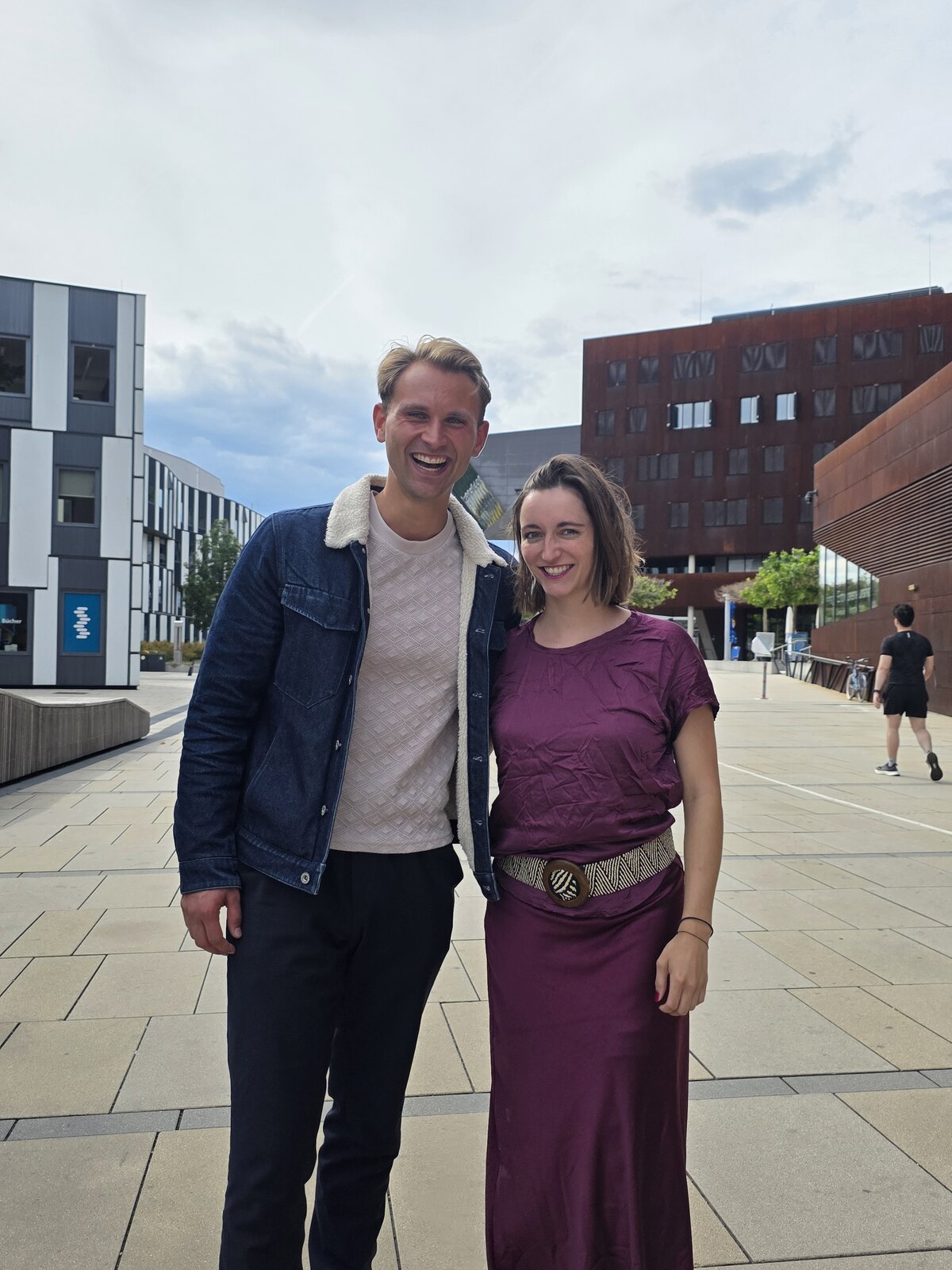
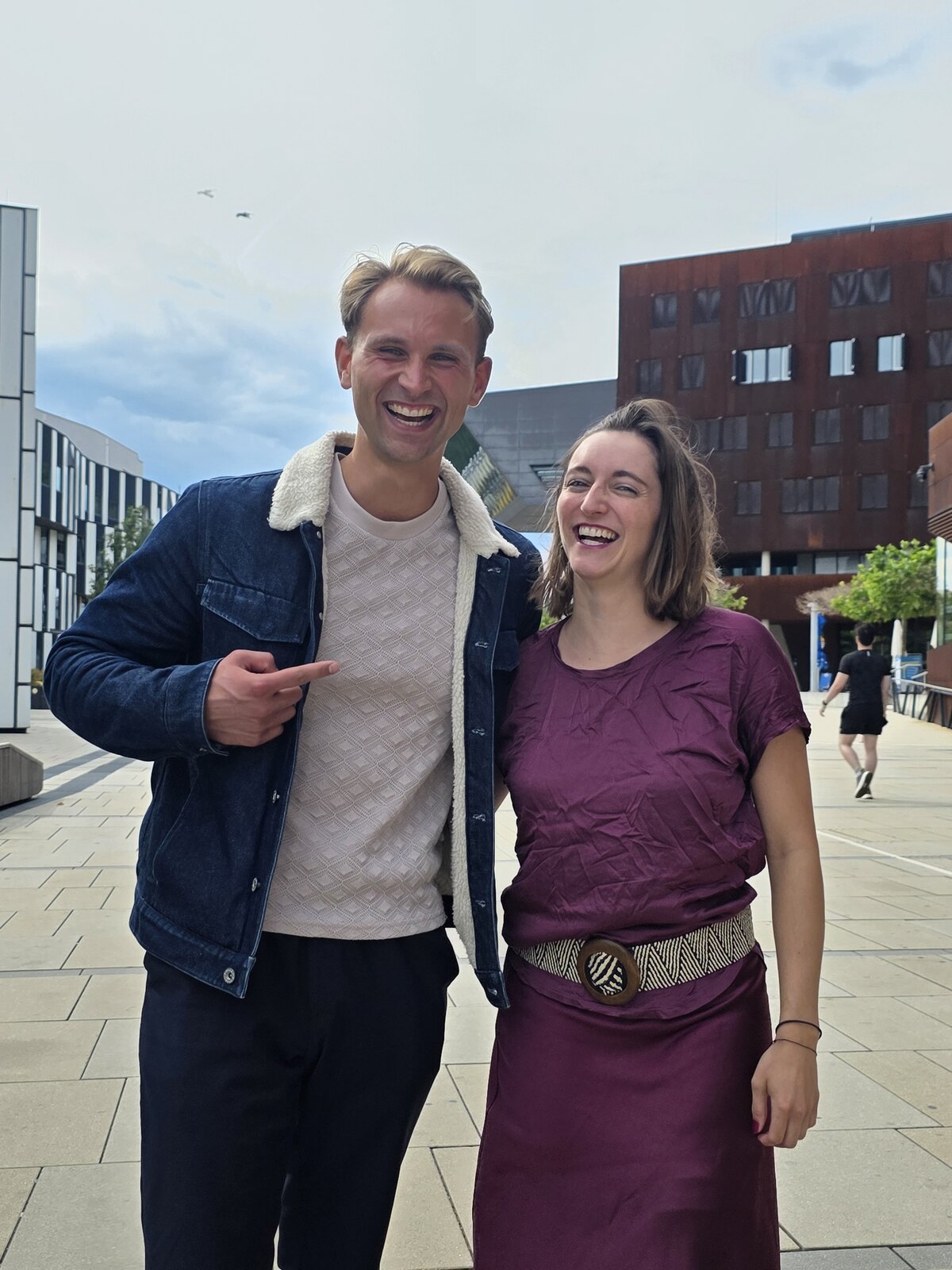
Robin Ijsseldijk
Welcome to the channel, and thank you so much for being here. I truly appreciate your presence. For anyone who is completely new to your work, could you maybe look back a little with me and share with the audience how you actually got to the point to call yourself a question queen, and being a mind shifting speaker? I mean, it is quite extraordinary. So could you tell us a little bit about that?
Valerie Rapatz
Yes. So I help managers with effective communication for successful leadership. So since I work as a leadership communication coach, I love doing my job. I usually work with very small groups, and people are like, "We wanna know more," or things like, it makes click. "Yes, I love it." It was so cool. And then, I was thinking of how I can reach a broader audience because I only usually work with a maximum of 8 people in a seminar or one person in a coaching.
Robin Ijsseldijk
Yeah.
Valerie Rapatz
And people were like, "You should be on stage." And I was like, "I think I should be on stage."
Robin Ijsseldijk
Let us get more into the frame.
Valerie Rapatz
Yes. And so, people were like, "Oh, you should do keynotes." I am like, "Yeah, sure, I can do keynotes."
Robin Ijsseldijk
If I can do 8 people, I can do keynotes.
Valerie Rapatz
I, absolutely. I mean, to be fair, I used to do presentations a lot. I did a lot of trainings in it, but I actually did not know what an actual keynote was. And then I started this, it was like a certification, become a professional keynote speaker. I was like, "Okay, I have no idea what a keynote was."
Robin Ijsseldijk
To start with. Well, you start with the basics, right?
Valerie Rapatz
Yes. The basics I knew, but there is a very big difference between a seminar, a presentation, or a lecture, and then a keynote.
Robin Ijsseldijk
And what is the difference between the two?
Valerie Rapatz
The difference is the way you communicate on stage. Because if you are in a seminar or a presentation, it is kind of like a lecture, I teach you something, whereas a keynote is storytelling. It is pure storytelling. It is a lot of metaphors, like the blue dotted banana, right? And so I developed my first keynote, which is called Powerful Questions, Meaningful Answers, Ask Right. And what it covers is what frustrates people most about questions. It is getting a way too long answer, getting a way too short answer, or not getting answers at all. And so in this keynote, I focus on solving this issue, and since my keynote performs so well, kind of like the president who gave me the certificate, he is like, "You are the question queen." I was like, Ooh, "I will take it."
Robin Ijsseldijk
Okay. Interesting development. Because I can understand that with that also comes a lot of, well, responsibility and maybe demands. How do you, and which mental habits did you actually develop to still protect your peace, but still delivering results to managers, leaders, the people you help?
Valerie Rapatz
Yes. I meditate twice a day. That is like non-negotiable, brushing my teeth, non-negotiable, when I get up, right when I get up, and right before I go to bed, which is probably wrong, but that is the time I actually do it, and that helps me a lot. And apart from that, I do a lot of sports in order to reduce the cortisol and adrenaline, and that is what keeps me safe, and meeting a lot of my friends, basically.
Robin Ijsseldijk
That can be a trigger, too. To touch upon that, I believe that also it was never always like this, you know, to be a speaker, to go on stage, to have presentations. Which point in your career led to that breaking point, but also, which question did you need to start asking yourself to let go of the version who you were before to the version who you are now?
Valerie Rapatz
I think one of the major breaking points was when I still gave a presentation, but I got standing ovations. And I was like, "Holy crap, that is such a good feeling."
Robin Ijsseldijk
I want more of that.
Valerie Rapatz
I want more of this. I think I am really good at it. And they think so, too. So that was the starting point. That is when I started telling my friends, "Hey, guys, I wanna go in that direction." And it was funny because my best friend from high school, I told him, and he is like, "Finally." I was like, "What do you mean with finally?" And he is like, "That just fits so much better than what you are doing right now."
Robin Ijsseldijk
Because was there something that people thought you would be doing instead, or did you see yourself as something else before that?
Valerie Rapatz
No, I just loved the connection that I could have when I am on stage, and I wanted to do more of that. And I received so much good feedback that it was kind of like a one step at a time process. I cannot jump to being a multimillion dollar speaker, obviously not, but I am gradually improving, and yeah, that is great.
Robin Ijsseldijk
And which part does the mind shifting speaker come into play? Because we have the question queen, but also you have a part when you say you are shifting minds, basically. What does it mean to be a mind shifting speaker? And basically, what does it mean to people, and what do they get out of it when you are on stage?
Valerie Rapatz
Yeah. I have told you that people tell me it makes click. I am not sure if that is a German saying, but it is like a flip a switch and it makes sense. Communication and leadership, and a lot of times where it goes wrong makes sense to them, and that is where I create the mind shift, and that is why I called myself the mind shifting speaker because it does not matter if it is the question queen, or if it is the blue dotted banana, it is always a mind shift.
Robin Ijsseldijk
What are the top 2 bottlenecks that you are seeing?
Valerie Rapatz
Hmm. I think I would go bigger. Because for the past couple of years, we have looked at the major issues that leaders have, and one is they have to speak properly, so they have to get across what they want to get across. And the second one is they have to interact. Obviously, there is a lot of team members that they have to lead and maybe even other levels that they have to communicate with or clients, so the interaction part. And the third one is they have to make an impact. They have to make decisions. They have to look how to improve and then go back, and it is kind of like a circle that repeats itself in leadership.
Robin Ijsseldijk
So if you take them through this process where basically every stage leads to eventually making them either speak better or enhance at least a quality, is that what you are saying?
Valerie Rapatz
Yes, exactly.
Robin Ijsseldijk
Interesting. Because I want to lead with that, actually, because I am focusing on the young generation, as you might know, and one thing that I noticed is that often people compare themselves, and they do not seem to get out of it. As a mind-shifting speaker and a question queen, what is a question or a perspective you can offer them, so the moment when comparison arises, they can snap out of it and focus on their own path?
Valerie Rapatz
Stop. You do not need more than that. Just stop. Focus on yourself, one step at a time. You are you. And one thing I have on my vision board, you are the CEO of your life. Do not compare yourself with others. I never did. When people ask me, "How did you get into being self-employed? How many other people did you look at?" I was like, "None." And they are like, "Well, how did you know what you needed to do?" I am like, "I just did what I thought people needed." "But how did you know you were not right?" I am like, "I did not care." I was just gradually improving. I did not have to compare myself, and you do not either, none one of you.
Robin Ijsseldijk
How do you think people can start building that attitude? Because not everyone maybe has that same mentality or is in the stage where they feel maybe that is too big of a step. Is there a middle ground where they could start to actually build that personality to eventually lead with focusing on their own path?
Valerie Rapatz
Yes. So there is a couple things that you could do. One thing is, it is like 10 minutes of ranting. So you can take 10 minutes of writing everything down that is annoying or not working, and then you can look at the things that you can change, and then change them. And the things you cannot change, well, leave them, right?
Robin Ijsseldijk
When do you think people change? Because I think that is also a very interesting concept.
Valerie Rapatz
Pain. If the pain is big enough. And I am actually just reading a really cute book, it is a dating book. I am not dating, actually, but it is like a tiny dating coach. And he will help you whenever your thoughts go, "I am not good enough," "I am struggling," "Why are others better?" And he will just be like, "Stop. What do you like about yourself? What do you like about your life?" And it is really funny because obviously it is a book, but I can see how that can relate to me as well because I have just been injured, right? And I am like, "Oh my God, I am the poorest person in the world. I cannot walk. I cannot use my arm. Everything is horrible." I am like, "No, you are so incredibly lucky. You have great family, you have great friends." So I think one thing, and that is what I would give anybody, is 3 gratitude things before going to bed. And you can either do that by yourself, and put it on a sheet of paper, a book maybe if you wanna collect it, or you just turn to your partner before you go to bed and just be like, "Those 3 things I am really grateful for today."
Robin Ijsseldijk
And how do you think this helps people? Because what I am seeing happening is that people sometimes stick to these habits, but after a week they stop.
Valerie Rapatz
Accountability partner. So for me, it was a lot easier with my partner because it was like this, mandatory sounds bad, but it has become a ritual, and if we do not see each other, we will just message each other. And sometimes if I am on vacation and I am just so tired, I forget, and then he is like, "You forgot." I am like, "Okay, yeah, I have to do it." I will have to do it the next day, or I will just message in the morning. And for me, it is a really good ritual for positivity, and if I cannot do it myself, I will call some friends to give me a kick in the butt and have me be more grateful for what I have, or I would call a coach. And I cannot even tell you, I have a coach, I have a mentor, I have accountability partners, and I have heaps of friends. So I try to figure out what works for me and that is really good.
Robin Ijsseldijk
And I have an interesting metaphor. Because you know, talking about comparison and everything that we are going through, building the capacity to be more grateful and focusing on the right things. What do you think about this? People should stop listening to themselves and start talking more to themselves.
Valerie Rapatz
Absolutely. Like one of my friends, she is a mental growth coach, I would say, and she even told me to talk to my individual body parts if they are hurting. And I was like, "That is insane." But since I had my injury I was like, "Well, please knee, be kind to me. I love you. You have been taking care of me, carrying me my whole life." And it is actually working. It is like, yeah.
Robin Ijsseldijk
Well, what does that shift mean? Because I think there are so many things to focus on nowadays that we could feel miserable about, but what keeps you focused on the good things in life that is still possible to get out of the misery and still focus on good things in life?
Valerie Rapatz
I think it is the feeling that I get when I do. Because we do feel sometimes down, overwhelmed, overworked. That is human, right? And there are some people that just want to stay in bed, and they do not wanna get up, and they do not wanna do anything. But when they do, then they are like, "Oh, the weather is super nice. The cocktail tastes really well." And so for me, it is always like, it is just a phase, and just get up and do something. And if it is not worth it, you can still go back to bed. But it is always worth it.
Robin Ijsseldijk
And I think I want to leave with that, because one thing that I found so interesting is that the whole reason why I am doing this is that I believe in prevention instead of repair. Sometimes things can be too late to be repaired, or you are there and the damage is too severe. And therefore, I would love to ask you some questions about my community as well, because they were very interested in the things that you were doing.
Valerie Rapatz
Yes.
Robin Ijsseldijk
So one of the questions that I got was about competence and answers. So first question is, how do I set up and show competence in a meeting when I do not have all the answers?
Valerie Rapatz
You just have to have questions, because that is the cool thing. And that is what my leaders usually have, like, "What if I do not have the answers?" I am like, "You do not have to." It is kind of like pulling on threads, just getting the right answers. And the first answer might not be the one that you needed, then just ask another question, right? So you would say come prepared, have your questions ready. Come prepared, or just be really good at asking questions.
Robin Ijsseldijk
Really good at asking questions. How does someone get good at asking questions?
Valerie Rapatz
Exercise. So get yourself into the topic. What I say is you open the thoughts of someone, or you close the thoughts of someone. And a lot of times people ask closing questions, and then they get a short yes or no, and they are really frustrated. I am like, "Yeah, obviously. Because that is what you asked, even though you did not intend to." So I did a systemic coaching certification, right? I am a systemic coach.
Robin Ijsseldijk
For people who do not know, by the way, what is systemic coaching?
Valerie Rapatz
Great question. Systemic coaching says that we all live in a system. And if you change one part of the system, the entire system changes. That is the core thing. And so it is systemic solution-focused coaching. So we coach people to find their answers, and we do not ever look at the problem. The problem is in the past. We always look at the solution, at the future, at the next steps. And by getting yourself into systemic coaching, you start being really good at asking questions. I would always call people out, "That was a closed question." And they are like, "Damn it."
Robin Ijsseldijk
We do not go there anymore.
Valerie Rapatz
Yeah. But for yourself, always invest in yourself. And if it is systemic coaching or anything else that helps you for your mental health, do it. Just think about how much you have spent on Starbucks or any other coffee. If you calculate how much you spend on that a year, take that money and invest it in your education, honestly.
Robin Ijsseldijk
People need to look into how much they actually value themselves and what they are worth. Because if you look at it like that, let us say you are getting 2 Starbucks a day, 5 euros, do that for 7 days a week, basically 365 days, that is a lot of money you can spend and invest in yourself. And I think you are familiar with this, but I once learned, it was in a podcast from Jim Rohn, I do not know if you have heard of him. But he says, "We are all equals as souls, but we are not equal in the marketplace." And the marketplace only rewards one thing, and that is what you can bring to the market as value. And I also think that a lot of people need to start investing in themselves, way more than they do in any kind of company that they work in. Do you agree with that?
Valerie Rapatz
I would agree, and I would add one more thing, because you said the value you bring to the market. I would negate that and say the value you can communicate to the market. Because I have a lot of really talented colleagues, and they just do not get out there. And nobody knows what they could bring to the market, and that is so sad. I spend around 20 to 25,000 euros a year on my education, right? And I am only able to do that because I am self-employed and I can reinvest, and it is much easier if you have your own company. But also, it is not given.
Robin Ijsseldijk
For the people who are watching, every time someone starts their own company, success is not given. You really have to build it. Some people feel like, oh, they are just successful because they are born with it. What do you think is the most common misconception people have, that people just get something instead of people actually needing to work for where they want to be?
Valerie Rapatz
That is already the misconception. You have to work for it. And obviously, there are some people that have an advantage. They know people. For me, when I started, people were like, "How are you gonna get clients?" And I was kind of like, "I have no idea." I just started, and then I was telling people like, "Yeah, I am doing leadership communication trainings." And they were like, "Great." And then they left, and then I would get a call, "Hey, Valerie, you have been recommended to me." I am like, "By whom? How did you get my number?" And that keeps on happening. So I have never spent a dime in marketing so far. It is only referrals. They do not get any money. They just like what I am doing.
Robin Ijsseldijk
And you also build it by yourself. I think this is a solid foundation, and it actually adds to an incredible answer. The second question I wanted to leave with is something more personal. Someone asked, "In a heated and highly emotional conversation I struggle to share my side of the story while also showing the other person that I truly hear them. What is a practical way to balance both so that the conversation stays productive?"
Valerie Rapatz
Let us reschedule. You have the amygdala, which is a part in your brain, and depending on who you were in those ancient days, if you were a hunter, you will react differently. And when it gets very emotional, you cannot think, okay? That is even scientifically proven, you cannot think. And I was actually training with one of my clients to calm your nerves down. So there is finger exercises that you could do. What I really like is a rooting exercise, but that takes time. And even when I am super energetic and I want to listen, and I want to ask the right questions, I want to understand the other person's world, but right now I just cannot. I will say, "Reschedule."
Robin Ijsseldijk
And by reschedule would you mean literally another day, is it an hour, 30 minutes?
Valerie Rapatz
That really depends on you. It depends on how big it is. It depends on how often you can see each other. Who it is. For my private partnership, we have a code word, and when we say the code word, we know that we end this conversation and we will pick up when both of us are more calm again.
Robin Ijsseldijk
So if you are in a relationship, whether business or an intimate relationship, the code word would work, but also practice those moments with each other. If there is something that you know is going to be heated, be aware of that, but also hold yourself accountable for the moments when it arises so you can actually say, "Hey, we need to draw a line here. Let us reschedule."
Valerie Rapatz
That was a very long question. What was the question again?
Robin Ijsseldijk
It was not a question, it was a statement.
Valerie Rapatz
It was a statement. Yes, absolutely. So I agree. You can be held accountable for what you do. You have to find your way, right? You will react completely differently than anybody else, and it does not matter if it is private or business. Just try to be the bigger person in the room. And it is really funny because I have only had one seminar participant say, "I do not want to be the bigger person in the room." And we are all looking at that person and we are like, "Okay."
Robin Ijsseldijk
What did you say in that moment?
Valerie Rapatz
She was probably one of the most challenging seminar participants. It was actually a change in perspective seminar, and she was not prepared for that. She is like, "If I give feedback, the other person has to listen." And I was trying to tell her that she should listen to the other side of the story. Have I told you the story about the pots with the water? Can I show it and tell you?
Robin Ijsseldijk
Yes, you can.
Valerie Rapatz
Okay. Because people understand it very easily. Just imagine I give you a pot with hot water. I want you to imaginary put your hands into the hot water. Amazing. Great. I myself, I have a pot with ice cold water. I put my hands in there. And in the middle, I put another pot with water, and that just has room temperature. Okay? I now want you to take your hands out of your pot and put it into the middle, into the pot there. How does it feel to you?
Robin Ijsseldijk
Not as hot and stifling. Like, I can manage to be here, stay there.
Valerie Rapatz
How does the temperature feel? Is it hotter or colder?
Robin Ijsseldijk
I would say a bit colder.
Valerie Rapatz
Okay. Really? Cannot be, because it is definitely, open your eyes, Robin, definitely warmer. Who is right?
Robin Ijsseldijk
We would both have our own perception, I guess.
Valerie Rapatz
Exactly. So if one and the same pot of water feels different to 2 people, and both are right, how is it for every other situation in your life? My world is not your world. And if people understand that, that is where communication starts.
The Pots of Water
"Hot water in one pot, ice water in another, room temperature in between. The same middle pot feels warm to one hand and cold to the other, and both are right. My world is not your world. That is where real communication begins."
Robin Ijsseldijk
Then you can have an actual dialogue with someone.
Valerie Rapatz
Then you can have an actual dialogue.
Robin Ijsseldijk
I think that is a very valuable metaphor. When things get heated, we remember the pot metaphor.
Valerie Rapatz
Yeah. You do not know how many people are like, "I have talked about the pots again." I was like, "Yeah, please do. Go ahead. It would be my pleasure. I refer to you, Valerie."
Robin Ijsseldijk
Well, I got 2 last questions actually, from the community. A lot of the younger generation. This question, for de-escalation. I tend to react defensively when I am criticized, which kills the conversation. Is there a specific phrase or question that the expert, referring to you, can memorize, so that I can memorize, to de-escalate a moment, stay calm, and actually listen?
Valerie Rapatz
I absolutely get that because I do not like to be attacked. I do not like people telling me what I have done wrong without telling me actually what I have done. And I do tend to, or I did tend to defend myself as well. And what I do right now is I try to calm myself, and then I will ask, "Why do you think like that? What exactly did I do?" And here is where my feedback framework works a lot. People, a lot of times, will tell you the effect it lead to. So you were annoying, or you were lazy, and then if I ask them, "What did I do?" And they are like, "You were being lazy." I am like, "No, that is not behavior. You need to actually focus on behavior and what you can do." But if somebody tells me, and it is kind of like attacking me, I will try to be like, "I am really sorry. I am really trying to understand what you are telling me, but I just do not know which hand movement I did or what I said, please tell me what I did so I can do better the next time." And so I get them to actually explain my behavior, and then I can still be like, "Yeah, that actually makes sense." And again, especially if we are from different cultures, my world is not your world. So if I say this, I meant it in a really nice way and it came across very rude, for example, and I can be like, "Oh, I am really sorry. I did not know that was considered rude in your culture or just for you." It does not even need to be culture. It can be your neighbor where it does not work, your colleague. It does not matter. My world is not your world. So if you tell yourself, "My world is not your world," let me try to understand yours, and then we can figure out how we can come together.
The Feedback Reframe
When criticism lands like an attack, regulate yourself before you respond. You cannot truly listen while you are busy defending.
"Lazy" or "annoying" is a label, not behavior. Ask "What exactly did I do?" until you get the specific action you can actually change.
Assume good intent on both sides. Understand how they perceived it first, then find the place where you can meet.
Robin Ijsseldijk
That is an interesting one because I think it touches upon the last question, too. Sometimes in that spot where you are saying, "Hey, I am being vulnerable. I am willing to see your side of the story as well, so we can meet in the middle." But sometimes it can also feel overwhelming if a person really feels that they are right about something. Everybody has the right to feel a certain way, of course, but sometimes it also kills the conversation. So an interesting question that I got here, how do you break the habit of shrinking yourself to fit into someone's frame and still confidently state your preferences without feeling ashamed? Because sometimes you can feel a bit dominated by someone's presence, not purposefully. But it can also lead to that spot where you feel like, maybe I should be a bit more reserved. Maybe I should not bring it this way. And then you dim your own light. What is your take on that?
Valerie Rapatz
Can I tell you a story about my 8th birthday?
Robin Ijsseldijk
Please.
Valerie Rapatz
So it was my birthday. I had an amazing party. My mom would always have great parties. And I am not sure in every country there is different ice cream. But in Austria, we have something that is called Twinni. And Twinni is one green, pear flavor or something, and one orange one. And every kid liked the green one, apart from me. I really loved the orange one. So, more for me. And it was really funny because my best friend, we were supposed to share the first one, to then have another one. And my best friend, she came and she broke the ice cream into two, and she handed me the green one. And she is like, "Today is your birthday. You are getting the green one." And I am standing there with this green ice cream, and I was like, "Should I tell her?" Because she did that because she really loved me. She wanted to. And I felt so bad, and I was like, "Ah, you know what, we are gonna share another ice cream, and then I will have the orange one. It is fine." The second ice cream never came, and since then I regret not stating that I wanted the orange one. Because I was fine with the green one, but I really would have wanted the orange one, and I even knew that she wanted the green one. So it was a lose-lose situation.
Robin Ijsseldijk
It is a lose-lose.
Valerie Rapatz
And so this is what I call the Twinni effect. If I state what I want, I raise the chances of getting it by so much, and that is what I wanna give to everybody. Please just state what you want. And do not be like, "I have to have it," but, "I would really like to have the orange one. What about you?" Then you will be like, "I would really like to have the green one." Great. So it works out perfectly.
The Twinni Effect
Say your real preference out loud instead of quietly settling for the "green one" to keep the peace. Silence is how you end up with the flavor you did not want.
Do not say "I have to have it." Say "I would really like the orange one, what about you?" so the other person can name their preference too.
Stating preferences openly raises the odds you both get what you want, and it kills the silent lose-lose where nobody says the truth.
Robin Ijsseldijk
It is an interesting concept because I love seeing preferences, but especially what you mentioned about raising the bar and to actually have a higher chance of succeeding to get your preference. But still leaving the table open to suggestions and having room for the other to also decide, like, hey, maybe I do want the orange one. But this space leaves room to also let the other think, oh, hey, she actually wants the orange one, and I do not mind getting the green one. So that is an interesting take. I did not look at it like raising the bar, so that is even for me an interesting perspective to consider. In wrapping those questions up, I want to lean in more on the items that we touched upon briefly in the beginning. You mentioned that leaders or managers in your environment, especially when they are either having a presentation or needing to interact, I believe that in that same spot is also a certain area of discomfort. Do you feel that people you are leading or coaching feel that they do not want to go a lot into discomfort to get the results they want?
Valerie Rapatz
Do I feel that they do not wanna go into discomfort? No, I think most leaders, and that is maybe one thing that makes them a successful leader or manager, they know that they grow in this zone of discomfort. So it is not that bad. Even just discussing about if the water is hot or cold is already discomfort, but if we manage to talk about it, we are good, right?
Robin Ijsseldijk
And one thing that I discovered for my audience, the young generation, is that people want to make progress and wish to grow, but they actually do not want the friction that comes with it. Which is like basically planting a tree, and then the tree wants to grow out of the soil, and the soil says, "Well, that is not going to..." I think you need to have that ability and sense to allow that friction. How can people start to allow a sense of friction in their world to still be able to tap into their potential but not necessarily take a cold shower or ice bath instantly?
Valerie Rapatz
I hate ice baths.
Robin Ijsseldijk
Do you actually do it or no?
Valerie Rapatz
Absolutely not. A friend, and he is always like a colleague, and he is like, "Val, you have gotta do ice bathing." I am like, "No." Honestly, it is not my thing. And so everybody has to find their own path. And I think one thing that really helped me is there is no wrong turn. There is none. You always learn something out of the next thing that you are doing. And as long as you keep that in mind, that even if it was a crappy job or a crappy boss, terrible team, anything, it teaches you so much. Actually, the worst times teach you the most. So embrace it and just find a way to balance it. Meditate, do yoga, go running, meet your friends. Do not do excessive alcohol.
Robin Ijsseldijk
I love it. So one thing that I noticed in the same area too, sometimes people are also very incisive, by constantly waiting for others to ask for approval if things are all right. I also think they deny themselves the opportunity to take a new place. So what is your first mental shift that is required to step out of that passenger seat and actually start making decisions for yourself?
Valerie Rapatz
That is a good question. I do not usually cover that with my leaders because they are usually already in a position where they have to take decisions, and I do not teach the teams to do so. But let me think of something that could help people. I think just trust yourself. Like I said, there is no wrong. Just try. I have done thousands of different things. My first job was when I was 16. Do you think I had all the answers? No. But when I was 17, I had 250 kids from Africa which I led around Austria, because I was the only person being able to speak English well enough. So I speak English and German. I do all of my training seminars or keynotes in both languages. But that is what really helped me.
Robin Ijsseldijk
How important do you think is making decisions for your success? Because oftentimes people have the saying that poor people make decisions slowly and change them quickly, and rich people make decisions quickly and change them slowly. I think if you really stick to something and you are committed to it, find out if it works. If it does not, then you can change. What is your take on that? How important do you think decision-making is for you?
Valerie Rapatz
I think a lot of people exaggerate the importance of making decisions. And yes, obviously, if I spend 10,000 euros on something for my education, and then it is crap, oh my God, that really sucks. But again, I learned something. I learned to know exactly what I look for. For me, I have talked about my vision board. I think having a vision of where you go is more important than having clear steps and processes to get you there, because there will be thousands of things that would come in between. You will meet people, will talk to people, and having a system in order is great, but just steering in the right direction and taking up everything that you find along the path is what gets you there and what makes you more interesting.
Robin Ijsseldijk
That is for sure. What do you think would be a perspective or a question or a mindset people could consider when they are either procrastinating or not taking action? Because I think that is where a lot of people stay.
Valerie Rapatz
Procrastination is a tough thing. I sometimes also have that. But there is a coaching method which is called the camel wheel method. And what you do is instead of having this task, which looks terrible, and I will not make it, and it is just too much, you just break it down into, I open my laptop. Can I do that? Yes. I look at the first email. Can I do that? Yes. And it does not have to be that tiny, but you break it down into very manageable chunks, and you just say, "I start." You do not even have to say, "I will sit for 5 hours, and I will do it all." Just start with the first thing. And it is so helpful.
The Camel Wheel Method
Do not face the whole mountain. Break the task down into the smallest possible next action.
"I open my laptop. Can I do that? Yes. I read the first email. Can I do that? Yes." Every yes builds momentum.
Do not commit to five hours. Commit only to the first step, and let the motion carry the rest.
Robin Ijsseldijk
So you would say that if you make a habit of the small things, then you can also make a habit of the bigger things?
Valerie Rapatz
Yeah, absolutely. You only accomplish the bigger things if you manage to get through the small things.
Robin Ijsseldijk
Exactly. Then, before we go into the wrap-up, I think there is a pretty interesting object that is laying in front of you. For the viewers who do not know, this is something that was laying on the table all day. But Valerie, could you please enlighten us why this banana is here? And what does it mean, and what does it do?
Valerie Rapatz
Okay. So the blue dotted banana is my leadership framework, and it is also my keynote topic. So it is a metaphor, and again, I will tell you a story. I have had a new team member. And me and my 2 male colleagues, we had to go to a client, so we asked him if he could do the hotel booking. He was very young, so he asked me, "How expensive should the hotel be?" And I was like, "Cheap. The client does not want to spend so much." And he is like, "Yeah, great. We will do that." And he came back, and he is like, "The room is so great," and, "The room is so great." And when he said, "The room is so great," for the third time, I was like, "Well, what exactly did you book?" And he is like, "A 3-bedroom." And it was so funny because to you it was pretty clear that me and my 2 male colleagues, we could not sleep in the same room. So, Robin, you and I, we are from the same world. We are from a world where we have trees with bananas growing there, and these bananas look like that. And if I say banana, you have the exact same image in your head. But if you are from a different world, different background, different knowledge, if I say banana, you just hear banana. So if I communicated banana, it was clear to me but unclear to you. And that is actually what we just had when I messaged you that we will meet at 15:30, which is the military time, and then you answered, "Great. Let us meet at 1:30." And I was like, wait a second. One is 1:30 PM and one is 3:30 PM. I thought you knew the military system. But see, I communicated banana. Clear to me, but unclear to you. And that is a framework I love because it applies so much to leadership because you have so many team members, so many different clients, and only because you explain something that is clear to you does not mean it is clear to others. So just be very explicit and make sure that your counterpart understands what you are saying.
The Blue Dotted Banana
Before you explain anything, remember your listener may not share your background. What is obvious to you is not obvious to them.
Spell out the specifics you would normally leave implied. Say "15:30, which is 3:30 in the afternoon," not just "15:30."
Ask your counterpart to reflect back what they understood, so you catch a mismatched "banana" before it becomes a three-bedroom booking.
Robin Ijsseldijk
Incredible. And I think in wrapping it up, first of all, thank you for all the incredible insights. It was really amazing having you. But I could not leave without this question. So if you could leave the young generation with one last piece of advice, what would that be?
Valerie Rapatz
My world is not your world. That will help you every single day of your life.
My World Is Not Your World
"If someone attacks you or puts you down, they have a reason, and it is real to them because that is how they perceived it. Understand how they see reality first. Then you can come together and have a better conversation."
Robin Ijsseldijk
Thank you, Valerie. Could you break it down just for the ones that maybe have not caught the message, how could that show into their own lives and how should they start thinking about what you just said for your advice?
Valerie Rapatz
If somebody is attacking you, if somebody is putting you down or something, they have a reason for it, and it might not be clear to you, but they are right in what they are thinking because that is the way they perceived it. Try to understand how they perceived reality, and then you can come together and have a better conversation.
Robin Ijsseldijk
I think that is incredible and invaluable advice to anybody watching, even not the younger generation. So a lot of people can learn from that. Well, guys, in wrapping up, that was already the interview. Tomorrow I will be interviewing a performance and mental wellbeing coach, also in Vienna. Subscribe and like only if you think it is valuable because I really need you to consider and make your own conclusion, and I would love to see you the next time on the channel. Bye.
© 2026 Robin Ijsseldijk. All rights reserved.