The Movement Warm-Up
Robin Ijsseldijk
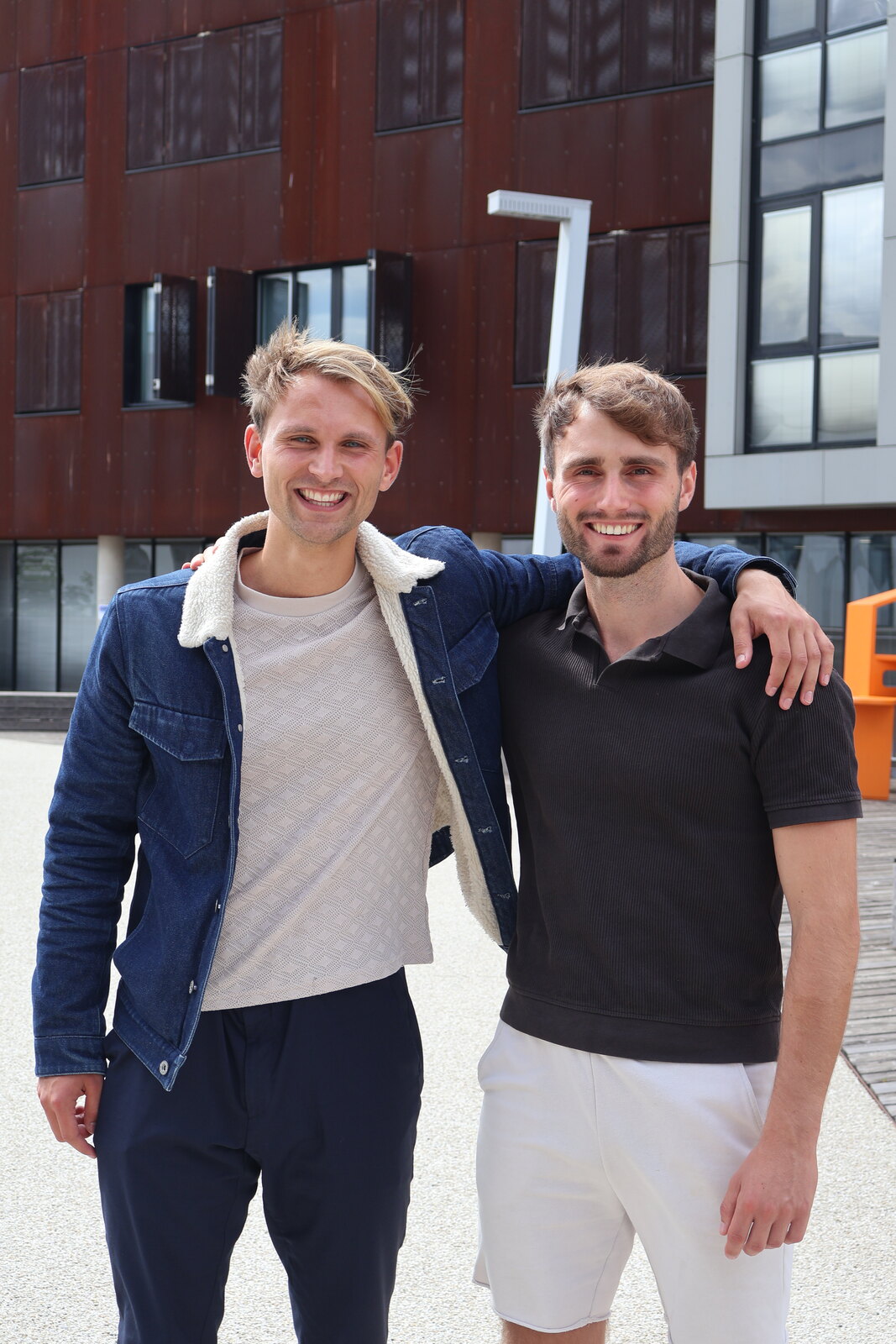
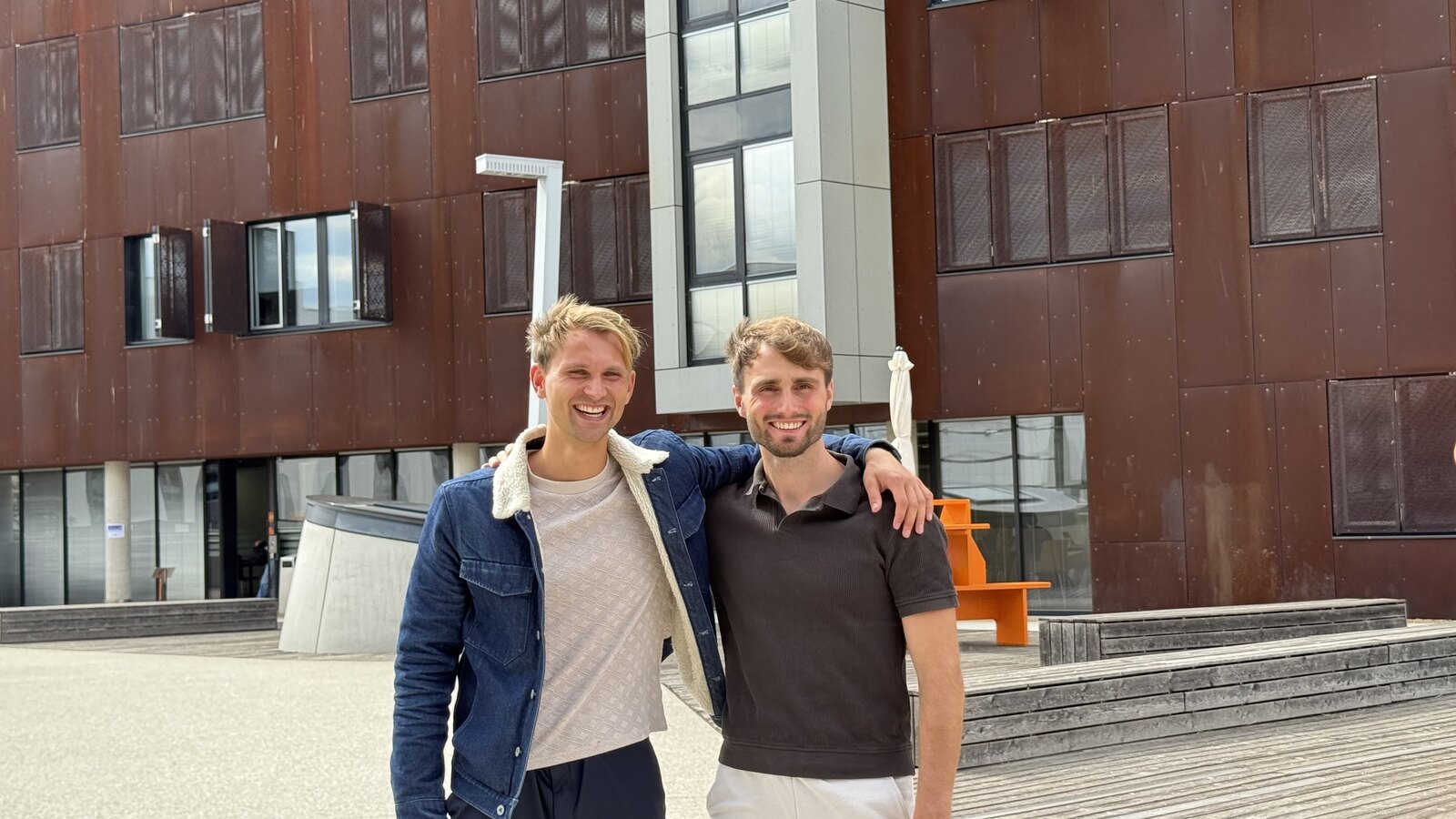
Hey guys, welcome to the channel. Today I'm here with Jason Sibilak, and he's going to talk to us about his Real Dopamine concept, and how we can let go of the cheap dopamine. But before we do that, we are definitely going to need to get some engagement in our bodies to ensure that we capture everything that we're going to include in the interview. So Jason, would you like to kick it off?
Jason Sibilak
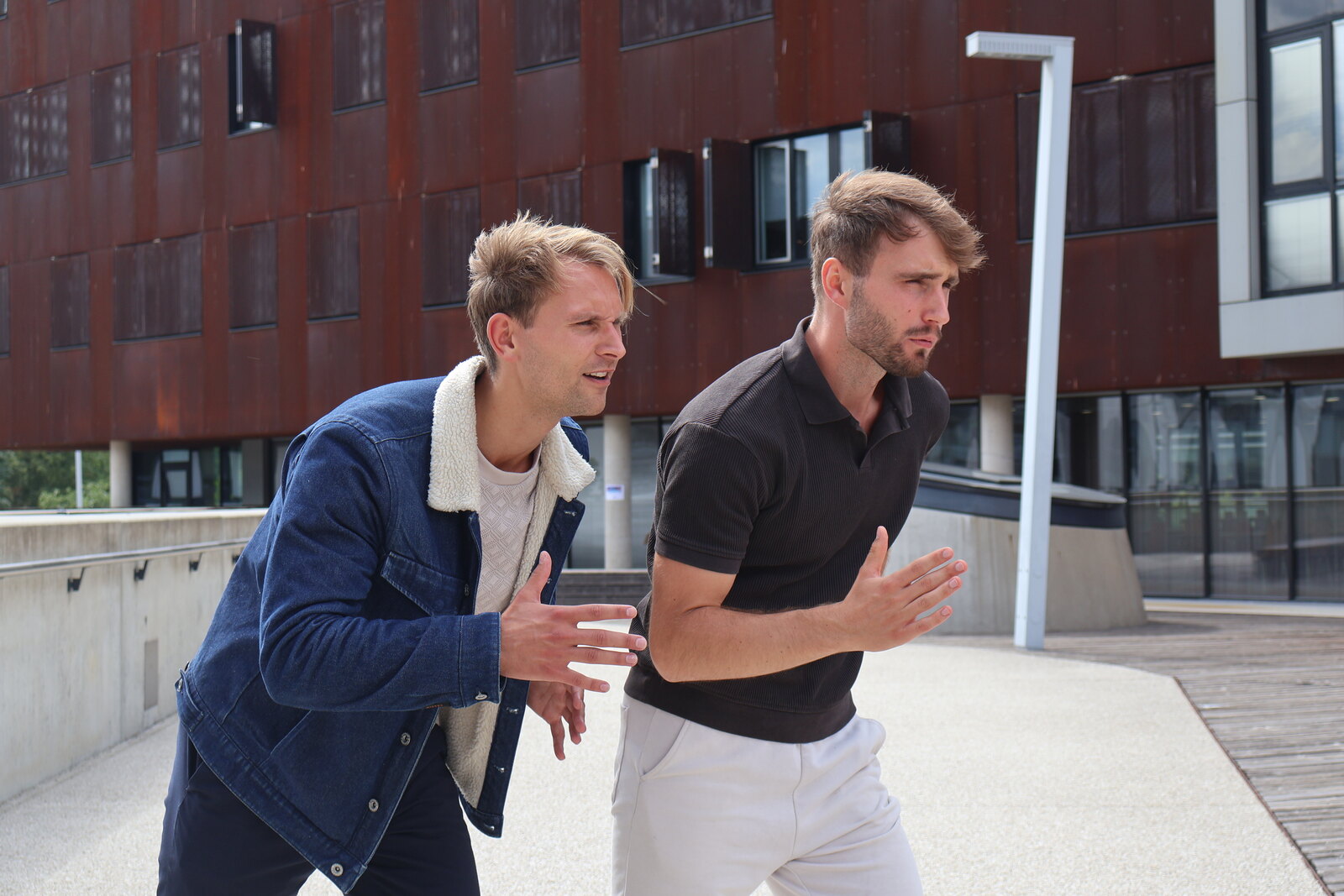
Definitely. I'm gonna take the lead from here. So I'm gonna do something, and we're gonna do it together. We're gonna do a total of three exercises. Before we start, we're already standing, and I would love for you guys to just stand up, no matter if you've been sitting all day or just got back into your chair. You want to stand up. So from here, we're just gonna stand up, get a little bit loose, maybe have some people join us as well, that's always possible. From there, we're gonna bring our toes together, and we're gonna try to bring our heels out as much as we can. Try to bring the knees in together, and I want you to really push out your hips. From here, we're gonna bring our hands onto the back of our head, and we're going to try to squeeze our elbows as far out as we can. And we're just gonna try to hold this for 30 seconds. So we're gonna start really small, really simple, and just try to have this for about four to five breaths. So what you wanna do is bring the heels out, knees in. And if this is too uncomfortable for you, you can also bring the elbows in a little bit and bring them back out. Doing perfect. You just wanna keep holding this. You doing all right?
Robin Ijsseldijk
Yeah, I'm doing all right. This is intense.
Jason Sibilak
Awesome. You wanna keep holding this. We're almost there. Try to give it a little bit of a bigger stretch. So maybe bring the elbows a little bit more out. Bring the chest a little bit more out. Take one deep breath in one more time. And one breath out. Release. From here, you wanna let the arms drop, bring the feet out, and just shake it out. Let it loose. Might feel a little opening in the hips, a little opening in the back. Just simple and loose. From here, we're gonna do simple body waves. More of a swinging motion. What I'm going to do is I'm gonna turn myself to the side so I can see you from the side, you from the front. We just wanna do a simple thing. We wanna try to bring our hands down to the feet, and we wanna bend our knees while we do so. From here, we just wanna swing our arms to the front and to the back. So bring a little bit of a swinging motion in. We're gonna fire up that lymphatic system, just get the body used to bringing up some energy from here. And we're gonna try to swing bigger and bigger. So try to swing more with your arms, and try to use your upper body with you. And the bigger we swing, we come all the way back up. We swing back up, and we swing back down, and swing up. Perfect. We're gonna do that for ten times. So we do for one. Perfect. Go for two. Swing back up. Go down and three. And go down for four. Awesome. Almost there. Five. Just gonna do five more. Already halfway there. Just keep swinging. If this is too much for you, you can just do the little swings down here. Perfect. Two more. Nine. And one big last one. And ten. Awesome. Now shake it out a little bit. Release. And the last exercise that we're gonna do together, we want to sprint as fast as we can on the spot. Sounds a little weird, but we're going to do it very simple. What you wanna do is you wanna take your favorite leg. You wanna step it back one step. Awesome. From here, you just wanna imagine that you're standing on the spot, and you want to sprint towards your desk, right? We're not actually going to do it. We're just gonna try to do it as good as possible. So we're gonna take left and right, and we're just gonna try to do a swinging motion with our arms. I'm gonna count us down. And on the count of three, I want everyone to try to really sprint as fast as you can with your arms. So don't try to run to your desk. Just try to sprint the arms. And we're gonna do that for a total of three seconds. Before we start, take in one more deep breath. Breathe out. All right, I'm gonna count us in. In five, four, three, two, one. Get ready. Come on. Let's sprint. Sprint, sprint, sprint, sprint, sprint, sprint. Damn, it's so hard talking and doing this exercise. Come on. Come on, come on, come on, come on, come on, come on. Keep going, keep going, keep going, keep going. If you need, take a little rest.
Robin Ijsseldijk
Come on, guys. Keep it going.
Jason Sibilak
Keep switching. Come on, come on, come on, come on. Almost faster, almost faster.
Robin Ijsseldijk
Faster, faster.
Jason Sibilak
Faster, faster, faster. Five, four, three, two, one. And stop.
Robin Ijsseldijk
Whoo.
Jason Sibilak
Whoo. Damn, I'm sweating.
Robin Ijsseldijk
Let's go. Me too. This is incredible. So Jason, this was a wrap, I guess. This was it.
Jason Sibilak
Yeah. Hope you guys are feeling well. Hope you guys are feeling good. Fired up a little bit. And now let's get straight into the interview. Now our body's all focused, all fired up. It's perfect for the brain because now the brain is really refreshed and ready to focus. So see you in a bit.
Robin Ijsseldijk
Jason, welcome. Thank you so much for being here. I told you I look forward to this, so that's why I'm happy I'm having you. So to set the baseline standard for anybody new to your work, can you maybe take us back a little bit to how Real Dopamine started, and what the difference is between the cheap dopamine that you're talking about?
Jason Sibilak
Definitely. First of all, thanks for having me. Thanks for being here. I'm just as excited. I'll take you back two years ago. I was still studying physical therapy, and I had a lot of internships during my time studying physical therapy. And if there was one thing that I always noticed, if I would talk with a patient about his diagnosis, the problem that he has with his body, I often realized that there's so much more to it. And to put it into more perspective, usually in Germany you would get around twenty to thirty minutes per patient that you can do whatever they get diagnosed with. And sometimes within that thirty minutes, I had the time to talk to the patient, treat the patient, and say farewell for the appointment. And I kind of felt in a rush to find things out. And I, at the same time, felt in a rush of not being able to really find out where the problem is actually coming from. And I always thought to myself, there's something so much deeper if there's an injury or if there's a way of rehab process. And so I started communicating more with the patients. So I would take extra time and ask them how their physical therapy experience had been before. How had the experience been in general? What did they witness? What did they maybe want to witness but didn't really get? And I came to the conclusion that oftentimes, especially if I would ask them if they did their so-called homework and worked on their body and worked on something for them to improve, that they would find a lot of excuses why they didn't do it. And this is probably something very common that a lot of physical therapists know, and I thought to myself, instead of being the person to be the teacher and tell you, you have to do this, otherwise you won't get better, I thought to myself, why is it that it's so hard for some people to really realize, oh, I'm not feeling well, or I have a problem, I can take my own responsibility and take good care of myself and find out where the problem is coming from and what's the best solution for me? And that's basically the story of how Real Dopamine itself got created, because I thought to myself, first and foremost, I wanted to create something real. Something that's not on paper where I just say, hey, I'm gonna guarantee you if you do this, you're gonna feel this, right? I was like, okay, how can I make it more real? First of all, I make it more personal, so I put more questions that I ask you so you know we're actually talking about you and your diagnosis, not the same diagnosis that I always see on a piece of paper.
Robin Ijsseldijk
Not generic advice.
Jason Sibilak
Exactly. Yeah. And the whole dopamine topic came so much with me, I think, because at the same time, when I was starting to study and do my things, I noticed a lack of attention so many times, that I thought to myself, I'm not putting in the right work. I'm not a good physical therapist because I'm not really being able to help my patients the way that I want to, and I'm not really focused on the goals that I want to achieve. But at the same time, I felt that I'm doing so many things at the same time, and we can get more deeper into that. At some point, I kind of realized, hey, I'm just wasting time. I tell so many people, or I find so many people, even my patients telling me, I don't have the time for this. I criticize them for that. Like, hey, you're in a hospital, you should have time to take ten minutes to, I don't know, maybe go sit on the toilet, for example, and not do it into your bed. And at the same time, I would witness myself looking at my goals and my things, making it more personal about me, and realizing I'm just making the same excuse, that I don't have any time to do all of this. I'm so busy. I'm so fully scheduled with all my things. But then if I would look at my phone and think back what I did late night at nine PM, even though I wanted to go to bed because I wanted to wake up next morning early, I was on TikTok for two hours, or I was on Instagram for two hours. And I literally came to the point where I realized, why is this happening to me? And the more I talked about it with others, I realized this is not just something that's actually happening to me. All my patients, all of my friends, or not all of them, but a big part of them are feeling the same way. And that's how the whole story kind of came, like, I think there's something deeper into this. I think there's something much, much deeper into the whole thing of what's your life purpose, what do you wanna do, and just what's your story behind it. And the funny thing is, Real Dopamine itself came together because, do you guys know the, what is it called, the, I'll call it gym company or just a gym brand, John Reed? It's basically, if you look up the logo from John Reed. I remember back then it was my girlfriend, now fiancée. I walked with her through Berlin. I was like, hey, you know, it's so cool. It's just two letters and everybody knows what it's standing for, right? It's like JR, John Reed. I was like, cool. I was like, why don't I just build, I didn't even know what a brand, nothing. I would say even up to now, sometimes I just don't know certain things, and that's totally okay. I was like, hey, I would love to have a logo that means something. And it was two years ago, 2024, when I was at the end of my studies, that I told her, hey, I would just love to have a John Reed logo, but in my own terms. And I just remember brainstorming back then, ChatGPT, you know, hey, I have this idea. I witnessed this, the story that I just told you about. And I would love to have a logo that's similar to John Reed. I can even show the pictures probably. I can send them in and you can put them into the video. Where it just spits out certain things. And I was like, nah, wait a second. And then I thought to myself, what's something that resonates with me? And without, at the same time, making it too much about me as a person, but something that someone else can resonate with as well. That you hear it, and it just somehow makes sense, and it sparks an interest. And I thought to myself, okay, the topic dopamine sounds so cool. I just love the word. I love the chemical that I saw, especially the more I considered going into information about social media and pornography, and all those things. I realized, hey, they have a lot of things in common, right? No matter if you do sports, if you do drugs, if you do this, anything has to do with your brain and with the dopamine and the endorphins. It's all similar. I can kind of put it together. And then I thought to myself, well, somehow everybody says it doesn't really feel real. So how about I start thinking about creating something that does? And I seriously just put that together, thought of the idea, contacted one or two people, and said, hey, what do you think? And then we kind of just drew it together, put it together, and at some point we got the logo together that exists nowadays.
Robin Ijsseldijk
Wow. That's a solid story. So what do you think is the difference for you between injecting real dopamine, as you're talking about, and the cheap dopamine that we're getting nowadays in the external world?
Jason Sibilak
I think the most simple way to put it, the one thing you choose and you actively act on, which is real, and the thing that's fake is that you don't get by actively choosing it. You just kind of get sucked into it, because it's designed so smart to find out what you and your brain and your attention kind of craves.
Robin Ijsseldijk
Okay. Can you break that down a little bit? What happens the moment when we go to these social medias, we're scrolling, we're TikToking, whatever it is that we do? What actually happens in the brain at that moment, and what do you think is the reason we forget to stop?
Jason Sibilak
First and foremost, the thing that craves your brain so much, or why dopamine becomes so interesting, it's not the fact of what you actually do which excites you, it's the fact of what could happen. The anticipation. The swipe mechanism is so catching because you don't know what's gonna come. It could happen in the next video. I don't know, it gives you an idea that you somehow find out how to make a million dollars. It could be a funny cat video that you wanna share with everyone. It could be anything in between that, and that kind of makes your brain go crazy on dopamine, and dopamine is an endorphin in your brain that makes you go into action. And the action is very simple. All you have to do is swipe with your thumb. Your brain saves that motion, and it kind of puts it like this: I get this high level amount of dopamine for this much amount of action. If I would have to get this amount of dopamine with working out, working out is much, much harder. So I'd rather just stay with TikTok, stay with Instagram, stay with whatever, because this is much more awesome. The bad part about it is, it doesn't really have a limit, and that's where people get sucked into two, three, four, maybe even five hours a day. If you look up studies, whether it's America or Europe, more people are hooked on their phone than ever. And we're trying to bring a perspective where we say, social media itself is not bad. It gives you tons of opportunities, but there's no real personal control into it. You don't know what's happening. The only thing that you realize is that you have the same outcome. That years go by, you look at your phone, and you don't even remember what you did those two hours. You just look at the time, and you're like, oh, wow, two hours just went by. Should I go work out now? Nah. Should I go do this? No. Because you literally kind of fry out your brain. There's a lot of videos online, and there's a lot of science that kind of shows how your dopamine levels spike and how they need time to recharge. So usually things that would bring your dopamine spikes up, these are things, to make it more personal, these are feelings that you would get after doing certain hard tasks of maybe reading a book, taking the time, or let's even call it having sex in that part, because we connect it with pornography, right? Things that make life worth living, that make it feel like living, it's the same mechanism, because your brain can't decide what's real and what's not. Does that answer the question? I forgot what was the first part of it.
Robin Ijsseldijk
That asked the questions. And I think that's an interesting perspective, because I think oftentimes we just view these things and frame them as just a bad habit, right? Being on your phone. How do you think people can test at their homes how bad their habit actually is, and their behavior towards their phones, so they're being presented with the reality?
Jason Sibilak
I would say, first and foremost, I've been saying that three times now, I gotta stop introducing the sentence with that.
Robin Ijsseldijk
Introducing a big repetition now.
Jason Sibilak
Yeah. Be honest with yourself. It might hurt. I can speak from personal realization. Yeah, it might hurt. It might hurt your ego to say, I think I'm wasting a lot of time as well, and I have this feeling that my phone's not really giving me the thing that I might hope it would. So the best way would be to look at the phone, look at your screen time, or even before you do that, because for some people, they don't believe the stats that they see. Just think back to your past week, and think about how often you looked at your phone and you really had a core memory. And really think back, hey, this memory was awesome. I loved this. Looking at my phone, watching this video, this was fantastic. And compare that to maybe something else that you witnessed throughout the week. You maybe had your first date. You maybe had your first workout session. You maybe had your first whatsoever without pain, which was also a big success for you and spiked a lot of dopamine hormones that kind of made you happy. Compare those two and realize which one would you rather have if you have to decide.
Real Versus Cheap Dopamine
Admit the phone may not be giving you the thing you hoped it would. It may bruise the ego, but that honesty is the start.
Think back over the past week to a moment on your phone that felt like a genuine core memory. Really look for it.
Set it against a real moment from that week, a first date, a workout, a session without pain. Then ask which one you would rather have.
Robin Ijsseldijk
There's a saying that the truth will set you free. And I think also sometimes people try to present themselves with the absence of it rather than actually seeing the truth for what it is. And I think that's also really interesting because nowadays we're so distracted with certain items and certain things that we do, and that's where my second question comes in, because I feel that a lot of people stopped believing their own bodies and forget how it feels inside, and how the real world, we need to keep calling it, actually feels. So what are to you the most important signals we miss every day that are signifying to us that we should start doing something different?
Jason Sibilak
That's a good question. I would say the first thing is, and that's also something that I have learned in my personal experience, no matter if it be my personal problems, my personal goals, or things that I want to do in my life, try to take one hundred percent self-accountability. No matter whose fault it might be for a certain situation, if it might have been the way you grew up, your childhood, your parents now, your friends now, try to really dim it down all the way and just focus on you for a second. Don't try to tell yourself, I have this problem because of this. Realize that you have the problem, and maybe start asking yourself, what can I, with the I being super big, do to improve this problem? Not what can this person do, what do I need, what do I have to do, blah, blah. What can I do? Because the answer to that question might be different for everyone. You might have the same problem. You might have ten people in the room with the same problem. If you ask that question, you might have ten different answers. And how hard is it to tell nowadays which answer's the best one?
Robin Ijsseldijk
There is an overload of information, and we are starving for wisdom.
Jason Sibilak
Exactly. Yeah. And if someone's not really one hundred percent certain that their answer feels true to them, you might start asking other people for advice. I'm not trying to say that asking other people for advice is something wrong, but you start to question your own opinion and what might feel good to you. And the second approach that I would say with that is, if you have a gut feeling that you have a certain problem, first and foremost, try to take self-accountability. Ask yourself, what can I do? And try to make it as simple as possible. What can I maybe do right now, today, to just do a little change? To give you a brief example, I have a lot of patients who are on a pain scale from one to ten. They tell me they're at an eight. I tell them, okay, so what's your problem? Well, my pain is this high. What's your goal? I don't want any pain. All right. But I want this jump within a day. Same thing happens to us nowadays, that we want change like this, and we can change that way, but we should stop putting pressure on ourselves that it has to have a certain outcome that we can show to the outside. Because that's something that we get sucked into so often nowadays. It's the same thing that, let's say, without hating on the running community, people don't go out for a run if they don't have their Strava with them. It's not a problem, but if you really go down, are you going out for the run, or are you going out to show someone that you went for a run? Are you actually doing it for yourself? What are you doing it for? And I think that's the same way we can approach problems nowadays. Like, hey, I have this problem. What can I do, and what feels good to me? And if you take that with you, you can just play around with whatsoever. It's just try and failure, try and failure, try and failure. If something doesn't work out for you, great. You tried it out. Now you know. Now you try the next thing.
Take One Hundred Percent Accountability
Set aside whose fault it is, the past, the parents, the circumstances, and put your attention on yourself for a moment.
Make the I enormous. Not what others should do, but the one thing you can do right now, today, to change it a little.
Do it for you, not for a result you can display. That releases the pressure and lets you actually keep going.
Jason Sibilak
I always like to say, there's this example that, as a metaphor, I don't know if I created it, I just kind of use it. I like to work with pictures. So if you imagine this table, the goal on this table is, I want to figure out or solve my problem X. Now, to do that, you have a bunch of options to eat from, right? We have a dining table, and we have a bunch of dishes that we can try from, and these are all options that might help you solve your problems. Now, imagine you're hungry and you have ten dishes in front of you that might help you solve the problem, I'm hungry. What do you do with the food?
Robin Ijsseldijk
Eat it.
Jason Sibilak
Exactly. But what do you do before you stick with one dish that you might eat up? You try the other dishes, and if you don't like it, you might be privileged enough to put it back and say, hey, this dish is not really for me.
Robin Ijsseldijk
Providing people with other options than just one.
Jason Sibilak
Exactly.
The Dining Table
Picture your problem as the goal on a table, and the possible solutions as a row of dishes in front of you.
Do not commit to the first one. Try different approaches, and if one is not for you, put it back without shame.
Ten people with the same problem can have ten different answers. Keep the dish that actually feels right for you.
Robin Ijsseldijk
It's an interesting, interesting, interesting story, because can I tell you a story of a community run that I had last month? So I was doing this first community run. A month ago I was in Vienna, and then after I came back from Vienna, I started looking into community runs around the city. So I'm getting into this community run, and at a certain point I was, you know, a bit exhausted and I was just walking alone in the community, which was fine. But at a certain point, there was someone walking next to me and she looked at me and she said, hey, how high is your heart rate? I don't know. She said, don't you? Like, you have a smartwatch with you. And I was like, yeah. And she was like, aren't you looking? Like, aren't you keeping track? And I was like, well, no. She said, why? And I was, well, first of all, we are in a beautiful environment to run in. I'm with a community that I get to interact with for the first time, and I'm being with people to actually work towards a similar goal. Which is basically reaching the 5K. There were so many aspects, and she was like, oh, wow. So you don't measure anything? I said, I do measure certain things, but I'm not dependent on it. And I think that's the thing that gets people, you know, maybe caused to spiral down into those places. Do you see similar things happening, you know, through your lens with people, like athletes or people that you help, that are dependent on certain either devices or habits that they have?
Jason Sibilak
One hundred percent. What you just mentioned kind of hits it really spot on, because there's one important term. If you have a problem with your running stats and your heart rate and you want to improve that, great. Do that. That's your thing. That's what you wanna do. Someone else might have the same problem and might have a different solution for it. Tries a different dish. Doesn't use the watch, just wants to be under people and run. I find that we have to stop comparing ourselves and other people with each other all the time, and just maybe ask the question, are you doing this for you, or what brought you to the consciousness of doing this now, right? Because we start to criticize so fast. If you're not doing this, then you're not doing it right. If you're not doing this, then you're not doing it right, right? And at the same time, that makes such a high level pressure of, oh, if I didn't get my five runs in, let me repeat that, if I didn't get my five runs in, I'm not worth anything. And your brain saves that. Your brain saves, if I didn't run a marathon under three hours, I swear I'm worthless. Where it's like, why did you do the marathon in the first place? Who did you wanna prove it to? Did you wanna prove it to yourself? Do you wanna prove it to someone else? Or did you maybe wanna show other people a version of you that's not actually you? And I think that's so important because nowadays we don't really know what we're dependent on. But actually, as a human being, we're only dependent on three things. We need water, we need food, and we maybe need shelter. Those are the three things, or let's call it maybe four to five, right? You can put the shelter with some sleep. And then you could say, all right, maybe you need social awareness. Because if you're completely alone, it might be boring. But some people live on an island for many years and they don't care. But those are like five essential things that you actually depend on. The other things are just things that you want or don't want. You don't need this. I mean, I know this from myself, especially if you're starting a business, if you're doing this, or if you're trying just to develop a strategy to find out solutions for your personal problems, it might be like, oh, I can't do this because I don't, let's call it into business terms, I don't have the knowledge, I don't have the idea, I don't have the degree. I'm depending on these things to achieve something that I want, that I have a problem with. A lot of people take advantage of that. But the point I'm trying to make is you don't really need it. It might help. I always say the same thing regarding physical therapy. You don't need physical therapy. You might find a way to move, do your things, even if you injured something at some point. Is it the way that you want it? No. Do you wanna recover faster? Yeah. Do you want help? Sure. If you don't want it, perfectly fine. And I think that's the same way on how we should approach things in our life. Just finding out, okay, what do I want? What's my problem right now? And what can I do without being dependent on the rest?
Depend On Only Five Things
As a human you truly depend on about five things: water, food, shelter, sleep, and some social connection.
Everything else is a want, not a need. It may help you, but you do not actually depend on it.
When you stop treating wants as needs, they stop controlling you, and you choose from freedom instead of fear.
Robin Ijsseldijk
And you actually opened the floodgates to my next question, because I think that's essentially what I really loved about interacting with you. You are all about prevention instead of repair, right? And you also work with athletes, so that's a trait I really respect and admire. Because what I feel is that a lot of people only go to seek either a physical therapist or a doctor when it's too late. Instead of preparing themselves to even not go there, to ensure that they can take care of their own bodies, right? So let me ask you this question. You also work with athletes, right? And you see highly driven athletes also break down in terms of all their discipline, how far they're willing to go. What do you think is a healthy baseline and standard they should have between giving it all while also still taking care of yourself?
Jason Sibilak
Good question. The most important thing, and this is something that everybody knows and everybody hears, but check the three most important things. How is your sleep? How is your water intake? And how is your nutrition? Those three things, if those three things are kind of already imbalanced, not really working well, or that you find you have a problem with it, I think that's gonna be a hard time for the person to find different ways and different routes, because that's just like a fundament for a lot of things that we do. Like I said, those are actually things that we kind of depend on. So if we neglect that for maybe too long a period of time, things might happen to our body that make us ultimately shut down. I mean, what's the result out nowadays? You get a burnout, you maybe fall into chronic depression, and your body's just not able to even stand up at some point.
The Three Pillars
Protect it first. It is the base the body rebuilds on, and the easiest one to quietly sacrifice.
Check your intake honestly. It is a need, not a nice-to-have, and it quietly runs everything else.
If one pillar is off, do not overhaul everything. Restore one small thing at a time and let the base come back.
Robin Ijsseldijk
Can you break those pillars a little bit down? Because let's say some of these pillars may be disturbed. Some are not getting enough sleep, or maybe going down one way or the other. What can somebody do to restore a baseline for these three pillars that you just mentioned?
Jason Sibilak
That's a good question as well. There's, I think, three steps which are the most important. There's something that also goes from Tony Robbins itself. Try to realize that everything in your life is a pattern, and the pattern that you might be witnessing is a pattern that someone else might have already had and someone else might have already solved. So you don't have to be alone with it. If you realize, I am a person who's doing this job in this situation, and I have this, we are more connected than ever nowadays. Just put that into ChatGPT and say, are there books? Is there information that I could maybe use right now? And you need to realize that there is a pattern. That's step number one, that you're not alone, and there are seasons, so things can get better or things can get worse. Number two is, recognize the pattern and use it for your own benefit. So realize, why do I wanna change it? Not just if I wanna change it. Why do you wanna change it? Let's say it like this. If you have a loving kid and I put the gun to the head of your kid and I tell you, you have to change right now or otherwise I'm gonna pull the trigger, your why is probably big enough to all of a sudden start changing your things. And nowadays we lack an importance of why oftentimes. We're like, ah, I should maybe do this. I should sleep more. I should exercise more. Ah. And then it goes away.
Robin Ijsseldijk
That little point of momentum fades.
Jason Sibilak
Exactly. And if you realize what's your personal problem and what might help, I would say the third thing is just go into action. Don't overthink it too much. The first thing that comes into your mind, try it out. Try the dish. Just do it. You won't know if it's the right dish or not until you try it. And if you just keep up those three steps with whatever you have, as simple as it might sound, you might have a good path of just figuring out what's your problem, like what's the biggest problem for you right now, and how can you improve on that. And I think nowadays we just make simple things so hard, and we become experts in, I can tell this from my perspective, a lot of patients become experts in telling me a thousand reasons why this pattern does not work for them. And there's one important thing: where your focus goes, your energy flows. That's where the energy's going, and as soon as I ask, all right, now name one thing why it could work.
Robin Ijsseldijk
They go blank.
Jason Sibilak
Totally. They just go blank. Nothing comes out.
Robin Ijsseldijk
Yeah. A lot of people know what they don't want, but they're not focused on what they do want.
Jason Sibilak
And with it, there's a saying, I think it's from Albert Einstein, like the craziest way of being crazy is doing the same thing over and over again, and expecting that something changes. And I think that's also the same thing with, no matter what kind of pillar is maybe hard in your life, just realize you don't have to change it right away. Just try to really break it down in a minor way. What is something that I can do right now in my capabilities for myself to improve on this? Don't have to do a huge step. The most simplest way to put it is, if you wanna lose weight, you don't have to lose ten kilos in four weeks. Start simple. And that's kind of where Real Dopamine wants to come in, and where we want to give blueprint questions so that the second pillar of finding your why becomes big enough. Why do I wanna change this? What prevented me in the past? What do I wanna change nowadays? What could I maybe do if I find myself falling back into the same pattern that I had before? Because we're all human. It happens. And I think with those three pillars itself, it builds a good foundation.
The Restart Sequence
Whatever you are facing, someone has already had it and already solved it. You are not alone, and seasons change.
Not whether to change, but why. Make the reason big enough that taking action becomes non-negotiable.
Do not overthink it. Try the first dish that comes to mind, because where your focus goes, your energy flows.
Robin Ijsseldijk
Yeah, and there are probably two things on my mind about the reason why. There's this saying, I think you know it, but if you have a powerful why, your how-to will reveal itself. I think if you have a strong enough why, a reason why you want to do things, stuff will show up anyway, right? But I also think it is, and there's this other saying, you might've heard it as well, if the promise is clear enough, the price is easy to pay. And I also think that a lot of people maybe do not share a sense of urgency to why they should change because they're very comfortable. Do you feel that people avoid being uncomfortable a lot? And if so, why? Why is that?
Jason Sibilak
I guess you can answer that question almost yourself. I would say one hundred percent. And the thing that I would love to add to that, it's not something that you should blame yourself for. We come from a past, if you look at human evolution, we come from a past where we were programmed to survive. So negative things have such a big impact on you and your brain. Every human is the same being. If you don't have enough water, you go out to get water. If you don't have enough food, you become hungry, and you go out to get food. But nowadays, we don't have those kinds of problems that would put us in a situation where we would have to go out hunting, walking for days, not being really one hundred percent certain, are we going to find water or not? We don't have those problems anymore. Our brain is the same, though. Our brain is looking for problems that we're trying to solve, and of course, it's easier for our brain. The same way what I kind of explained in the beginning with putting, let's say, social media, or let's even break it even deeper, pornography and sexual relationships. For a lot of people, the brain kind of thinks to himself, I have pornography. I have a thousand women without having to do any effort. It's free, and I have such a huge dopamine spike. Why on earth should I go the hard way, which is uncertain because I might get backlashed, or someone might tell me, no, I'm not interested, or I might blame myself or shame myself, whatsoever. Your brain has a survive mechanism, so your brain tells you, all right, let's do the thing that is the most comfortable, has the least amount of trying to be uncertain or uncomfortable, because it's trying to protect you. And there's a saying that always goes, if you realize that pattern, you'll realize that on the other side of being feared of something is such a living moment. Like, no matter what it is. Your biggest fear right now might be your best friend, and it might be a guidance of showing you that's a thing that you should probably try out right now. If your biggest fear is to approach that person, talk to this girl, to talk to this man, or maybe try out something different, you should probably go with it, because even if you try out the dish and it sucked, all right, now you know.
Fear Is Your Best Friend
The pull toward comfort is a survival mechanism trying to protect you. Recognizing that removes the shame.
The thing you fear most is often pointing at exactly what you should try. Treat fear as guidance, not a stop sign.
Life starts at the end of your comfort zone. Try it, and even if it fails, you have learned and you are free.
Robin Ijsseldijk
Totally different point. I would like to say, life starts at the end of your comfort zone. Would you agree?
Jason Sibilak
One hundred percent. One hundred percent.
Robin Ijsseldijk
I think that's like this part where people do not maybe wish to look into, where there is the most growth for us as a human being, but also how we can evolve beyond what we already know, right? And also, that's the next topic that I wanted to touch upon. What I really love about you, and I mentioned it earlier, you're also all about prevention instead of repair, right? So let's say, why does dropping that tight control give you back your motivation, for example, and how does someone become their own study? Because you also said that if someone becomes their own study, they could actually be able to prevent certain things other than they don't.
Jason Sibilak
I would love to add on that, that it doesn't have to be always prevention. It can be, but it can also be action when something already happened. There are two different pillars. The two kind of do work essentially at some point the same way, right? So it doesn't matter if something traumatizing or bad has happened to you, because as a human being, we've all lived through certain things and witnessed things that were maybe not so nice. Everyone might have had a similar diagnosis or maybe a similar thing that happened to them, but everyone has a different approach on how to basically treat that cause or find a good way for them. And to just bring that into perspective, to kind of also answer the question of why should you become your own study, is because the outcome can be so different even though the thing that happened was the exact same. So let's bring it all the way back. What most people like to talk about is, I'm not made for this. I can't do this because of something in my past. Makes sense. Don't blame yourself for it. Everyone has it. It's not an easy topic. Nobody has it easy, and it's becoming a more and more open topic nowadays that maybe our parents or grandparents never had the possibility of talking about. If you would open up, I don't know, I feel like this, shh, someone will tell you to shut up, right?
Robin Ijsseldijk
Usually, yeah.
Jason Sibilak
And nowadays, if you go back that way and you find things out for you, you can use that to find out, okay, this is me. This is my story. I always like to tell my coachees that I work with, imagine your life being a book, and you have the pen in your hand at a certain age. From a certain age gap, from let's say zero to eighteen, twenty-one, depends on the country, depends on where you grow up in. A lot of people can just take your pen and write in the pages for you, right? Do this. Don't do that. That kind of makes the first third of your book, and that kind of gives you a feeling of, oh, okay, I should continue to write like this. It takes a lot of courage to say, all right, instead of looking into ten thousand other books on how did people solve these problems, I should maybe focus on my book and take the pen into my hand and figure out for me what helps. And to go more into detail of that, there's this personal thing that I have with it. I love studies. I love science. At the same time, people who know me would know this about me, put me in front of a laptop and tell me to look at a study and do a resume about ten to twenty studies, I'm not the best in that. It's not because I don't care about the topic. It's because I have a hard time telling people, oh, because of this study, this is gonna work perfect for you. And I just can't take that trust, that I find a lot of people in my position as a physical therapist, or maybe with a doctor's degree, they take that. I studied this. I did that. Do this. This works. It can. It hopefully will, but I think nowadays we're not often aware of, if I tell someone this works and then it doesn't work.
Robin Ijsseldijk
That's the most fear.
Jason Sibilak
That just makes them go boom. It's like, wow, now this doesn't work. Science didn't work. My doctor's opinion didn't work. What do I do now? And that's where we come in and say, become your own study. Find out if it works for you, and if it doesn't, or if it doesn't fit into this period of your life, great. Then switch it. That's what makes life so cool. That's what makes life so meaningful, right? If you don't wanna wake up at four AM and do an ice bath because everybody does it, great. If you wanna do something else, do it.
Robin Ijsseldijk
There's no one-size-fits-all.
Jason Sibilak
One hundred percent.
Become Your Own Study
Others wrote the first third of your book. It takes courage to stop copying other people's books and write your own.
Do not outsource your trust to a study or a title. Try the approach and see whether it actually works for you.
If it fits this season of your life, keep it. If it doesn't, switch it. That freedom is what makes it meaningful.
Robin Ijsseldijk
Yeah. And I'm actually happy that you brought up the topic, because in figuring out which blueprint fits one person, I brought you a guest as well from the community. So that's why I would love to introduce you to someone that I brought, and I would love for you to break these questions down that you haven't answered at all.
Jason Sibilak
Sure. Of course, one hundred percent.
Robin Ijsseldijk
We will include it. So guys, we're going to switch out me for an amazing guest here. I wanna briefly introduce her, and then she's going to ask the questions to Jason himself, and then we'll be right back with you.
Rita Steps In
Robin hands the questions over to Rita, a member of the community, who asks Jason her own real-life questions before Robin returns.
Rita • Community
So hello, everyone. My name is Rita, and I'm very, very pleased to be here with Jason. Thank you so much. This is such an interesting interview. I have one question, or like, I have several. Some of them you already answered, actually. But for example, regarding the part of the neuroscience of the dopamine, for example, if someone constantly gets quick and easy hits of dopamine, does their brain baseline also kind of drop?
Jason Sibilak
It's a good question. I would say it doesn't change in that moment. It changes in the moment where you unconsciously go into social media or things that kind of drain your dopamine levels. There's a perfect video, I think, that's also backed up by science, where it shows how your dopamine receptors work, and that they have a certain limit. Meaning that usually if you would work towards something, you would get a dopamine hit kind of afterwards. With social media and whatever the other topics are that kind of spike the levels, they spike it to a maximum, which would usually not really be possible. I have a good connection with it. I know it's a very sensitive topic, but I think it becomes more realistic if you kind of put it in perspective of pornography, for example. Pornography, you have that possibility of seeing a thousand people nude within such a short timeframe. Your brain can't compare. Your brain just gets fired up, but this would be something from nature-wise, it wouldn't even be possible. Because you would have to talk to people, do this, do that. You would have to have a huge way to get the same outcome. And because it spikes up so high, your brain kind of gets used to it, and at the same time, that's why we often use the term you really do fry your brain at a certain point. Because all of a sudden, your brain is used to having this high level of dopamine, where other things in your life, they don't reach that at all. And then it's harder for you, let's say, and to answer your question more directly, if at the beginning of your day you started with scrolling or did this, the way of coming back and really being focused on other things that you want to do, it's not impossible, but it's much, much harder to a certain degree.
Rita • Community
It's a slower pace, right? Because social media has such a fast pace always. And then you need to kind of take time to getting into the slower pace of what actual normal life is.
Jason Sibilak
One hundred percent. One hundred percent. It's exactly like that, because I think something that we can all resonate with is with studying, for example. If you want to try it out on your own, go on social media for ten minutes, scroll through TikTok reels, whatsoever, and now try to put the phone away, and try to sit down for ten minutes and read something that you have to learn. You'll notice that your brain is like, hey, this is not cool. I'm not getting the same level of excitement. And all of a sudden, you start saying to yourself, or your brain starts telling yourself, I need more of the easy things and I need less of the hard things, because the hard things are not fun. And they don't give me anything, so I do more of the easy things. But if you look at it on a five-year path, where it leads you to is often an outcome that I think a lot of us feel or know nowadays, and I would personally say, which feels kind of miserable to a certain degree. That hanging out with friends isn't as cool anymore, or doing this for your personal life isn't as cool anymore. You rather, or even, I think this is something that we all know from a certain age. Let's say we take video games or a movie where the attention span would be longer. If there's a boring part, your brain resonates with it. Like, oh, this is boring. Let's get something that's not boring. And that just kind of brings everything, I don't know, let's say into a swirl. Where if I'm talking to you face to face and my focus is not here because I'm bored, my reaction might be like, let me just get my phone out. Let me get a quick hit. So essentially, it kind of becomes like a drug.
Rita • Community
And do you notice, for example, that, so our generation, younger generations, we grew up with the technology, or at least the evolution now, the younger generations even more. Do you notice or do you think there will be repercussions, bigger repercussions, or they become more vulnerable than, for example, our grandparents or our parents in terms of focus, in terms of even how to deal with life? Because life in a way was harder in a way. Do you feel like the younger generations, our generation, is more susceptible to be vulnerable mentally, emotionally because of this relation with technology and how it is affecting our way of how we perceive life? I don't know if it was too hard.
Jason Sibilak
No, no, no. It makes perfect sense. I would say one hundred percent. First of all, because you realize that the problems that you might have, you're not alone with. At the same time, it could be too much misleading information or too much information at once. The same thing that I kind of mentioned before with, you take pornography, you see a thousand nude people. Now all of a sudden, you have a problem, and instead of maybe talking to one or two people, you find information on this problem, which is like this, right? It's a huge list, and you don't even know where to start. So it's a yes and no answer to the question. That's also kind of where we think, or why this whole topic of building a brand of Real Dopamine becomes so important, to say these things are not bad. They're not the bad guys, right? There are some technologies that we can use. AI, it's not all bad. Social media, it's not all bad. It can give you so many cool things. It can keep you in contact with most of your friends and whatsoever, but at the same time, if you don't consciously control it, like what are you using it for, this thing might happen where you get controlled instead of you telling, hey, I'm gonna control this. This is what I want to do.
Rita • Community
And because you mentioned also that if you could have redesigned a feature of one of the social media platforms to become more, I would say, healthy, which feature or kind of change would you do in social media to become a little bit more, not too controlling, and just more use it as a creative space, not as such a consuming space?
Jason Sibilak
Ooh, that's a good question. I think it's hard for me to answer, to be honest. Because I don't wanna shoot any fires at the people behind it and say, oh, you should change this, because at the end of the day, what they're doing is just smart. It's a whole concept behind it. But let's just put it into terms. If you would change something, this might sound so cliche, I wouldn't change anything. Because it would not change anything with the problems that you might have with social media. We see it. I think they're doing it in Austria now as well, but I think Australia started with having a social media ban for the age up until sixteen. If you would maybe change something with social media and hope, oh, this might change a lot, people are not stupid. People are gonna find a way to go around it. If you do an age degree until sixteen, people might find a way to tell you that they're above the age of sixteen and just still use it. Or go onto their mom's phone and do this. So I would say the question that I would love to bring in, or like the solution, is finding out what do you wanna do with that time, or what do you hope for on social media? That's like where blueprint questions come in. There's always a reason for you to go on social media. Do you want more connection with friends? Do you want to have a good laugh? Do you want to do this? If you find out your why, why you're doing the things, and you might realize that you're not getting the, let's call it pleasure, that you would hope for, I think it kind of puts it whole back into perspective. What I put in the beginning of the interview is, it's easy to say, oh, this is the problem. They are the problem. If this wouldn't happen, it would be much, much better. But it wouldn't change anything at all. Does that answer the question, though, at the same point?
Rita • Community
Yeah, because you're responsible for it as well. Yeah, it does. It actually, it's my last question, because you mentioned several times about self-awareness in order to analyze your own patterns in order to then evolve and get out of your comfort zone. Do you think that people are scared of taking responsibility of their own life, you know, to actually do the change? And the biggest question is if they're afraid of missing out, like of missing the opportunity, actually missing, or they're afraid of their actual potential self. Because people sometimes are scared to take actions or bold decisions, and sometimes I question myself, are they scared of it going wrong, or is it really gonna be so great that they don't believe they actually can be that potential of a person? So as you've already dealt with different people, what do you notice, the pattern actually? If it's more on the pessimistic side, or they don't believe that they actually can become this?
Jason Sibilak
Have you had a personal story with this as well?
Rita • Community
Yeah, I did. Yeah.
Jason Sibilak
What would you say is the one thing that might be holding you back?
Rita • Community
I think it's you're scared that it actually will go well, that you can actually become that thing that you really wanted to do or to be.
Jason Sibilak
And with that connected, it might also answer your question a little bit. What are you scared about?
Rita • Community
That it actually comes true, in a way. That you can actually be confident enough to be it. Yeah.
Jason Sibilak
Without trying to tell you that it's not going to happen, because I believe in the best in people, and it will, if you put your mind to it. What if it doesn't?
Rita • Community
If it doesn't go well? I'll figure it out.
Jason Sibilak
The point that I'm trying to make, and this might answer your question why most people, I think, suffer or don't do this step, who can you blame if you take self-responsibility? Because there's only one person that you can blame.
Rita • Community
Yourself?
Jason Sibilak
Yeah. And I would say that's the biggest thing why people don't do certain things. Because if I go this way, and it doesn't work out, it's much more fun to blame the weather, blame this, blame that, and we have a hard time blaming ourselves. And we don't see, let's call it the fruit that's behind, not blaming ourselves in a bad way of like, oh, I suck, I should have done this. No. And blaming ourselves of telling ourselves, if I want this, I can do this. I can find this out, and I have no one else to blame but myself. How would you say that refers into your terms? Is that something that you would be afraid of?
Rita • Community
No. I don't think so. I feel like if it went wrong, it was a lesson. And I feel like you need to take accountability of the things that you do. And you're responsible for your life, because life comes from you, you know? And not at you. In a way of like, life doesn't happen to you in a way that things outside are responsible. You also put yourself there. So, yeah. I feel like it's important that you take responsibility and accountability of the things that you do.
Jason Sibilak
One hundred percent. And that's, I think, a trait that most people lack nowadays. They like to put themselves in a comfort situation, where they like to blame others, blame situations, and it's a pattern I think that so many people repeat so often. If you sit down with someone and all they do is just blame others, blame people, and this and that, who has the problem at the end of the day?
Rita • Community
Yeah. It's them.
Jason Sibilak
It's the person who's talking about it, not the person that they are talking about. And as soon as you've taken the accountability of saying, all right, I can't blame anyone else. I can only blame myself. And I don't want to blame myself, so I'll just try. And if you have that with you, no matter what situation you are in, just do your thing. Because if it works out or if it doesn't work out, you don't have to be scared of anything. And if you are, try to tell yourself it's good. Being scared and having fear is your best friend, and it's trying to show you a certain way of just try it out.
Rita • Community
Yeah. Okay, thank you.
Jason Sibilak
Thank you. Thanks for the questions.
Blame Yourself Forward
If you take full accountability, there is only one person left to blame, and that is freeing, not crushing.
Not "I suck, I should have." Instead: "If I want this, I can do this, and it is on me to try."
With no one else to blame, the only move left is to try, and then you have nothing to fear either way.
Robin Ijsseldijk
Jason, let's get a little bit deeper and personal, because I was very sparked by the conversation just now. What is something that you blamed yourself for in the past, but turned around as the version of yourself that you are now?
Jason Sibilak
Can you repeat that one once more? Where did you blame yourself for in the past? For the past or in the past?
Robin Ijsseldijk
In the past. And how did you turn it around?
Jason Sibilak
Oof. That's a good question. I think, being such a young age, that was first and foremost the thing that I blamed myself for. I'm too young. I don't really know. And this would also be something that I would attract towards me. If I would tell people about dreams, things that I want to do, they would be like, ah, you're young. You're still ambitious. That's cute. But when you become older, you'll be welcomed by real life. And I always thought to myself, what is that? Am I not living in real life right now? Like, am I not alive? Am I not doing things? And that was something where I always started to also blame others or blame situations. I would think about my past, things that maybe have happened to me, and start thinking, oh, if this wouldn't have happened, everything would be much, much easier. And also say, if this thing wouldn't have happened to me, I would've had much, much better chances in life. Just to give a little background story, I was born in Germany, and at the age of four, my parents and I moved to America, and I was raised there for four to five years. And due to the financial crisis in 2010, we unfortunately lost everything and had to move back to Germany afterwards. Coming back to Germany, I was the American boy, and as much as I thought that was cool, I had a hard time getting back into school rhythm, because when I came back, it was third grade in Germany, and the level of certain degrees in third grade Germany was just different than in America. So I had a hard time, even though I could understand German, I had a hard time getting into the knowledge, being confronted because of all the attention that I got of, hey, this kid is from somewhere else. It wasn't too common back then, in a little village where I came from. I still remember the funniest thing. I remember this to the day. I was so nervous, and someone came up to me, oh, you speak English, right? I'm like, yeah. So you must be from England, right? And me, as a little kid, having no idea where England or America was, and I was just afraid. I was like, yeah, yeah. Exactly. I'm from there. I have no idea where that is, but I'm just, yes, I'm from there. And I just remember, I have an eight-year-old brother who would tell me like, hey, dude, that's not right. That's not the case. Anyways, to bring it back into reference. With what I mentioned throughout the interview, everyone has their story. And I would always blame that story, not realizing what kind of treasure was behind it, and realizing that everyone has a story. And of course, there might be a certain weight with it, but there might be a treasure that comes along with it. And I think the biggest time in my life where I had a switch was because I was a school year who basically had his twelve-year degree in Germany during COVID, and then the whole world changed, and we started blaming everything all of a sudden. And I was like, wow, what do I do now? I mean, I was gonna study business informatics, which I did for almost one to two semesters. But I didn't want to. I thought it was the right thing. And I still remember to this day that it was my fiancée that I was on the phone with. We were together for around about eight months at that time, and I would call her, because the second semester just started, and I would be like a little kid, like, ah, screw these classes, you know? Like, ah, I don't wanna do this. I'm doing maths. I love math, but at the same time I hate math. But this is how it has to be, right? I wanna continue in life. And she would be the person to ask me like, hey, have you ever realized, because during COVID we spent a lot of time, she said, you never talk good about the thing that you're studying. But as soon as we start working out together, you just can't shut up, and you're showing me a bunch of exercises and things that I can do, and I never asked you for it, but it's cool. Your energy just shifts. And I was like, huh. Interesting. Back then, I didn't realize that. And back then, in my thing, the fear that was holding me back was like, I can't earn a living with this. Everybody knows everything about fitness, right? Because that was something that I was doing 24/7. At the age of fourteen, I was already giving breakdance classes to a lot of students, little kids. I had a trainer's degree at the age of fourteen, and took on a lot of responsibility, and was a dancer who had several performances and did championships. And not to compare myself, but I always thought to myself, ah, okay, this is just fun. Real life is gonna come at some point, and it's gonna be different, right? Like, this is just fun as long as I'm young. And then that's also what kind of brought me into doing business informatics. So I was like, ah, now comes the real life, right? Now I'm gonna earn some money, and it's gonna suck, and I'm gonna get off work at six PM. Just have to go through the turmoil, and then it'll be fine. And I know the story was a bit longer now, but that's where I realized like, wow, I'm blaming everything that I'm doing for the sake of my problems, and everyone's responsible but me. And that was the decision where I then had the courage, thanks to her, to step up to my parents and people and everything to say, hey, I'm gonna quit this. I don't know what I'm gonna do yet, but this doesn't feel right, and I'm not gonna study this for another three years and work for another three years and then maybe find out. So I'm gonna quit it. And that's where I got into finding out, through getting together with a coach or someone who actually asks me blueprint questions of finding out, what do I actually wanna do? And before I came to that point, she really made me realize, take one hundred percent accountability for yourself. Don't blame anyone else than yourself, and you'll see how the world is going to open up. You know, that's been a pretty big thing.
Robin Ijsseldijk
Well, I think also a pretty vulnerable moment, because then was the first time where you actually needed to start looking inwards. And say hard words.
Jason Sibilak
Back then, if you would've talked to me, I know I love to talk. But back then, I was like a waterfall. I wouldn't stop talking about topics and this and that, and she was the first one who would kind of, in nice terms, be like, hey, shut up. And, exactly, kind of asked me, tell me this one thing before. And then I would be like, ah, you need to hear this story. You have to know where I'm coming from. She's like, no, tell me this thing. And I would just sit there and be like, huh. It was just silence, where I then thought to myself, okay, what do I actually want? Is it okay for me to want this? I guess, maybe. And just speaking that out for the first time, I was like, hey, this feels good. You know? I was like a little kid. I was like, wow.
Robin Ijsseldijk
That's the real thing there. Yeah, yeah, yeah.
Jason Sibilak
Exactly.
Robin Ijsseldijk
Jason's fiancée, if you're watching, I think Jason is very grateful for that.
Jason Sibilak
One hundred percent. One hundred percent.
Robin Ijsseldijk
Let's bring it back a little bit to the topic, but thank you for sharing your personal story. It's really incredible to hear how things shifted for you, and I think a lot of people can learn from that, because sometimes we meet people in a journey that can really help propel us forward, but you need to be willing to be open to that experience. It always doesn't land. So taking it back to the cheap dopamine, in terms of how we resonate with that, do you think that cheap dopamine at a certain point can replace our social and physical interactions, or that we can even compensate for that? And if so, why?
Jason Sibilak
I would say to one hundred percent, and the reason being why is because your brain can't make a difference. Your brain only thinks about reward and no reward. So if there's something that gives you a high level reward for little effort, your brain tells you, this is awesome. Do more. Why would you not do this, put in more effort, and maybe get less of a reward? That's not cool. It's not fun. You'd rather do the thing that's less effort and more fun. And I think it's a very dangerous area that you can head into, but the term that I've made maybe a few times during the interview today was, it's not the enemy. It's not the one bad thing. It's not the black and white, like, oh, you have to shut it off completely and never use it and never talk with anyone on your phone ever again. You can learn to use what's your problem, what's maybe something that appeals to you, putting it into the words that you just mentioned, like, hey, I would love to be more socially active, but I always spend time on my phone FaceTiming with people. I want to maybe do more of this. Cool. Try it. Then just say, all right, I don't have to quit FaceTiming with old friends or people, but this is something that interests me right now. Let me try it out. And I tell you one thing, and this is also from a personal story, because if you want something, and you just say, I'm just gonna try everything out that's humanly possible, you will filter at some point what works for you and what you want to do. So to give a certain guideline to the thing that you just asked, if you want to meet friends or meet new people, nowadays it's easier than ever. If you have social anxiety, look up a group that meets online before they even meet in person. Because of course there's a story of you meet someone online, right? And there can become bad stories of, oh, you met someone, and they kidnap you, and all the bad stories, right? Where parents tell you, don't do this at all. Makes total sense. Be aware of your surroundings. So if you have that, go into a surrounding that feels safe, and just think about what's your problem. I have social anxiety, for example. I have a hard time getting around people. Great. Take that. Nowadays, just put it into AI. What can I do? And the thing is gonna spit you out a few options. Do the one that suits you. Do the one that fits you. From there, there's just gonna happen basically like a trail that leads you to the goal at some point of meeting new people. I can put it into my own personal story, because I think it's always easier to lead by example, or to show by proven things that worked. I moved to Vienna here last year. I didn't know anyone, and everything was new. So I was self-employed. I was building up my physical therapy business, and I didn't know anyone, and I thought to myself, okay, I am going to start to get to know people. What's the best way to do that? I don't know. Never done it before. Like, usually I would grow up in an area, dance with people, and this would help me, and I was like, hey, wait a minute, I can take that. So sports, for example, can connect you. I was like, all right. For my personal pattern recognition, sports connects me with people. I love to work with athletes, so what's the best thing that I can do? And I googled that, and I found a run club Vienna. That was the first thing that I did. I was like, all right. Awesome. I have a list of ten running clubs. I'm just gonna visit them all. That's what I did.
Robin Ijsseldijk
Wow.
Jason Sibilak
First weekend in Vienna, boom. Like, no excuses. Just straight to the run club, go there, talk with people. I don't like talking to people. Well, I don't have to, but if I want to meet new people, this might be a step that I should do.
Robin Ijsseldijk
Everybody can talk to you, like, it's the first time.
Jason Sibilak
Exactly. And got to know people there, and then from there, it just all kind of kicked off, because I thought to myself, okay, I came in with some massive energy and some massive action. So I was like, what else can I do? So I downloaded an app called Meetup, where you can literally meet up with people, to a certain degree. I had no money at that time, so that was a big restriction that I told myself. Like, oh, shit, I can't spend money. I can't go to an event or something, right? I can't go to a concert or whatsoever. All right, I'll just do all the things that are for free, that I can do. Or even if there's something that's not for free, and I wanted to be there so bad. I even have a YouTube video where I kind of share that, because I was thinking about documenting the whole building a brand, building a personal identity from scratch. I just went to an event that was free, and they were all talking about an event that was not free, and I was like, all right, I can't pay for it. I'm already in debt, so I'm not gonna be able to pay for it unless I want more debt. I can just ask around, like, what else can I offer? Like, hey, in my case it was, maybe we could do this and I can offer you a free physical therapy session, and you can maybe bring me into this group, or present me to this person or whatsoever. So the point I'm trying to make is there's no limits on what you want to do if you just always try to think around it. And the problem that you might have, that I had, which was no money, no idea of what to do, was just say, okay, I have this. This is my problem. How can I use it for my benefit? And so I just started trying things. Trial and error. Trial and error. Trial and error. And let me swear, that stuff made me elevate within twelve months, like, as fast as you can imagine. So even if someone's watching this and telling themselves like, oh, I want to do this super fast, like, first of all, bro, calm down. Like, why, right? Why do you have to become a millionaire, find your best soulmate, do all of these things within a two-year frame, and get kids? It's like, dude, how about you just drink some water? It's just, have a sip of water and be grateful for the things that you do have. But to put that into active perspective, just kind of think about, okay, what do I want? What do I wanna do? And if I have a certain timeframe of, like, I want to do this in three months, great. Then do it for three months, and just try. But don't blame yourself if something didn't work out in that timeframe, because you become a better version of yourself when you just start moving. Kind of think about it like this. This perfect picture of saying you have a ten-story building. On the tenth floor you have all the goodies, right? You have your soulmate, you have the relationship, you have your business, you have whatsoever the hell you want. But there's no elevator, man. And if you wanna go up there, you have to go step by step. And you can't jump the floors. You can't just jump up there. You can try to cheat. You can use a helicopter. You can, I don't know, whatsoever you want. It's not gonna be easy. Or you could say, hey, even if I have a hard time taking the first step, because let's put it into perspective, I'm on crutches. I can't walk. And think about, what can I do to maybe take the first step into getting to my tenth floor?
The Ten-Story Building
Everything you want, the relationship, the business, the life, sits on the top floor, and there is no shortcut up.
Helicopters and cheats do not work. You climb step by step, and you do not blame yourself for the pace.
Even on crutches, ask only: what can I do to take the very first step toward my tenth floor? Then start moving.
Robin Ijsseldijk
Because sometimes it's not maybe that you need to physically get somewhere, but also mentally get somewhere. And I think what you were touching upon in terms of the options that you were mentioning, I literally discovered something. I was just literally saying this to myself, and I was in a similar position that you were in, and it touches upon the part of being curious. And having the options. And being curious about the options. So here's what I told myself, meaning that you move toward the marvel if you are curious enough to find it. So that reason why became so strong that I also became curious to what else is out there, because there's not only one option. So I think that completely sums it up in that perspective. And I thank you for that. And the last question that I do have here is that, in the passing of time, we talked about being your own study. So if someone that is watching decides tonight to become their own study for just one week, what exactly do they need to observe, or measure, or write down for a single day? And what pattern needs to show up that they could be surprised by at the end?
Jason Sibilak
A good question. I'll give you three answers so people can choose from it which one suits them best. Answer number one would be, ask yourself three questions. Question number one being, how do I feel right now? Question number two being, do I want to feel this way for the rest of my life? Depending on what the answer is, question number three says the same. What can I do right now, no matter how small or how big, to maybe change or move one step into a different direction? Answer number two being, find people, find books, information, where people have maybe had the same struggle as you, the same problem, the same goal as you. Try to connect with them. Try to find a book, a podcast, and maybe try to find people who have a similar mindset, whatever it is, to become socially more aware of, you're not alone with the things that you want. There's a lot of people out there as well. You won't find them if you sit in your bed all day on TikTok. Sorry to put that. And part number three, and I think this comes a little bit into personal branding and things that we want to create, I'm gonna put it out there. We are still working on our website, but if you have a hard time checking out these two things, you can come onto the website, which is realdopamine.com, and there is a button that we're going to put in, if it's not already uploaded by now. There's take a test. The test shows you how much life expectancy you have, how much time, no matter if you want or not, is gonna get wasted by sleep, eat, all the things that you have to do every day. How much time you still have free, and how much time you're using on your phone, and also, into reference, something that we talked about, how much is that costing you. And use that as a guideline for you to just see a stat, like, oh, this is me. This is my time. This is this. And connected with that, even though it might not be the perfect product right now, we have a blueprint, which is a workbook which shows you how to reduce your screen time efficiently with different methods. So if that's a problem that you might be struggling with, I can gladly invite anyone to try it out. Give your reviews on it, how it works for you, how it doesn't work for you. Take the test, and with those three things, just keep in the back of your mind that there are seasons to everything. Meaning, even if you might have a rough season right now, it can get better. If you might be on the top of your life, calm down, because it might happen that tomorrow the next slap is gonna come. And that's life, right? There is winter, spring, summer, fall. It's gonna happen. It's gonna happen.
Robin Ijsseldijk
It's gonna cycle again.
Jason Sibilak
Just be aware it belongs to you, it comes with you, and it's something that you can take away with you no matter what.
Robin Ijsseldijk
Jason, final question that I have for you. What is one piece of advice that you would give to the younger generation that could really improve the quality of their lives?
Jason Sibilak
I think in reference to all the topics that we talked about today, put your phone away for a day or seven days if you really wanna test it, and find out who you are. That's something that I would give to anyone, and find out with those seven days, what changed? Did you change? Did you not change? What did you miss? Just find out. Just put your phone away.
Robin Ijsseldijk
I think what you brought to the table is an experience that we might know intellectually, but we didn't execute it. And I truly believe that there are components in this conversation that people can work with. So I want to thank you for your insight, and I really, really enjoyed it. Thank you for that. I'm also going to leave his blueprint and workbook in my community so you can check it out. But for now, I do want to thank you for being part of the channel and also being part of the conversation. So Jason, thank you once more, and I'll see you out there in the next video. Goodbye.
© 2026 Robin Ijsseldijk. All rights reserved.